← Back to Species Database
Vietnamese Giant Centipede
Scolopendra dehaani
A powerful Southeast Asian centipede with variable coloration, formidable venom, and surprisingly versatile hunting behavior.
LIFESTYLE: Terrestrial
DIFFICULTY: Advanced
ADULT SIZE: 6–9 inches (15–23 cm)
GROWTH RATE: Moderate
TEMPERATURE: 23–28°C (73–82°F)
HUMIDITY: 70–80% RH as a guide; moist lower substrate with good ventilation.
About This Species
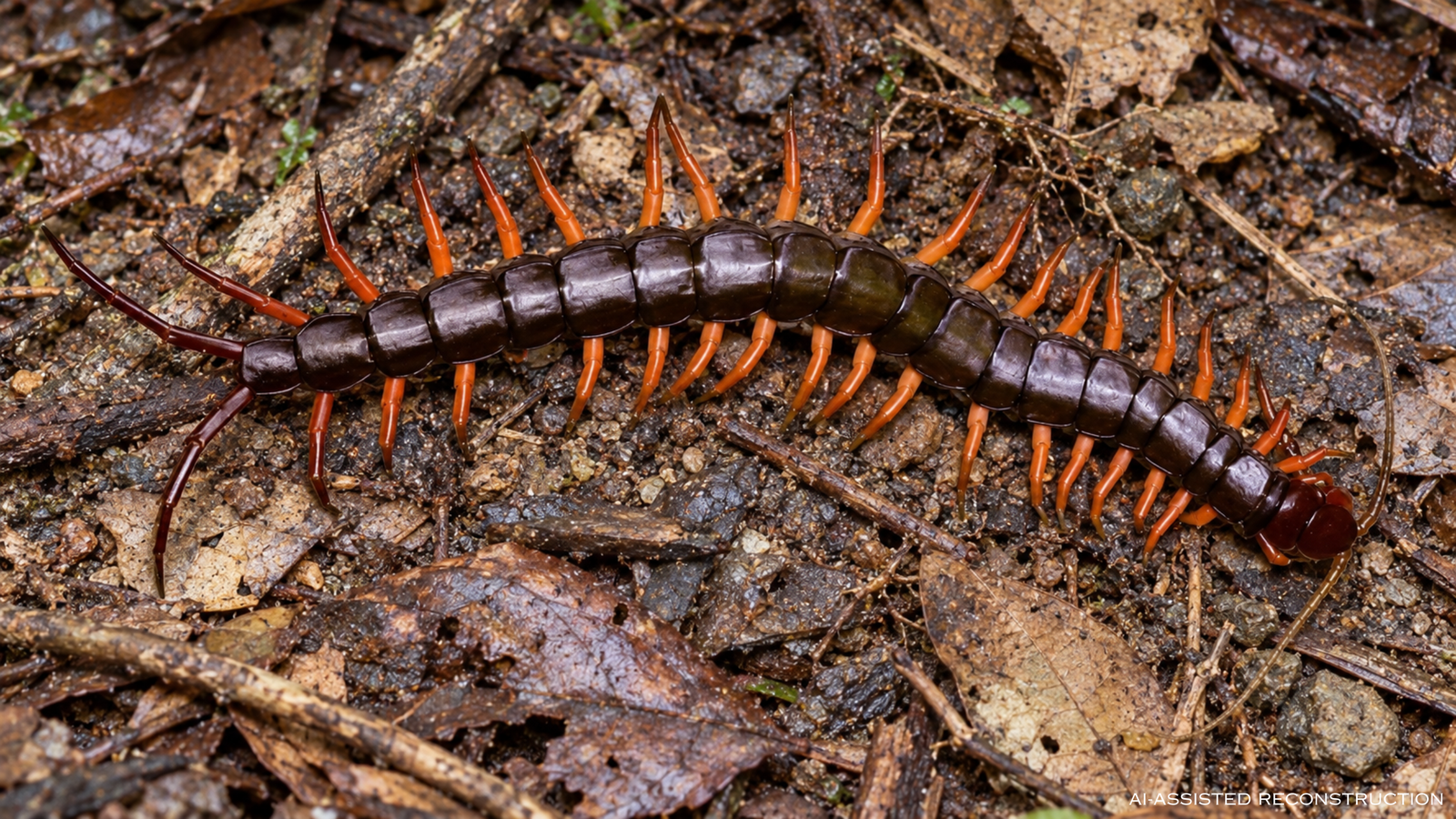
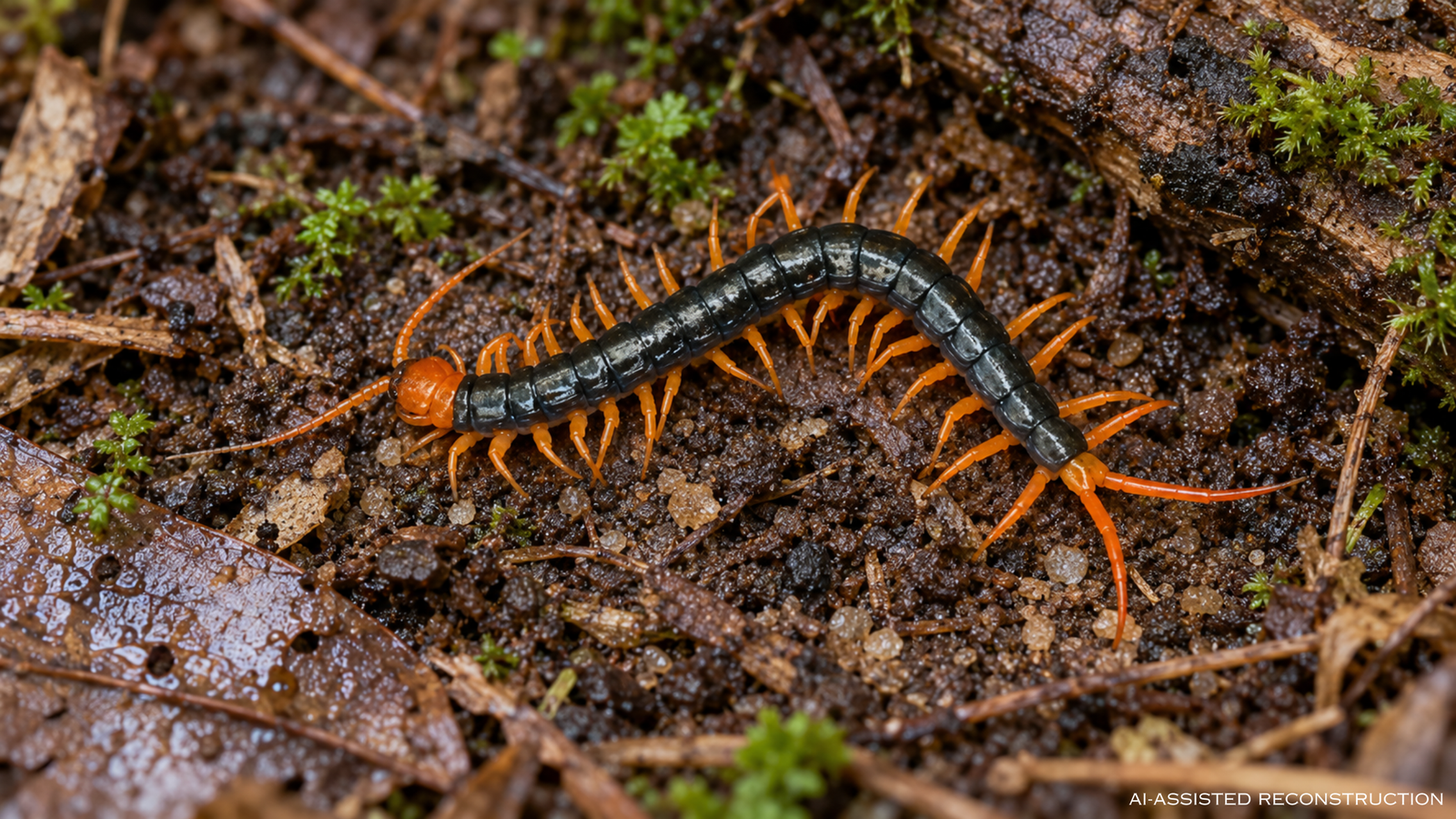
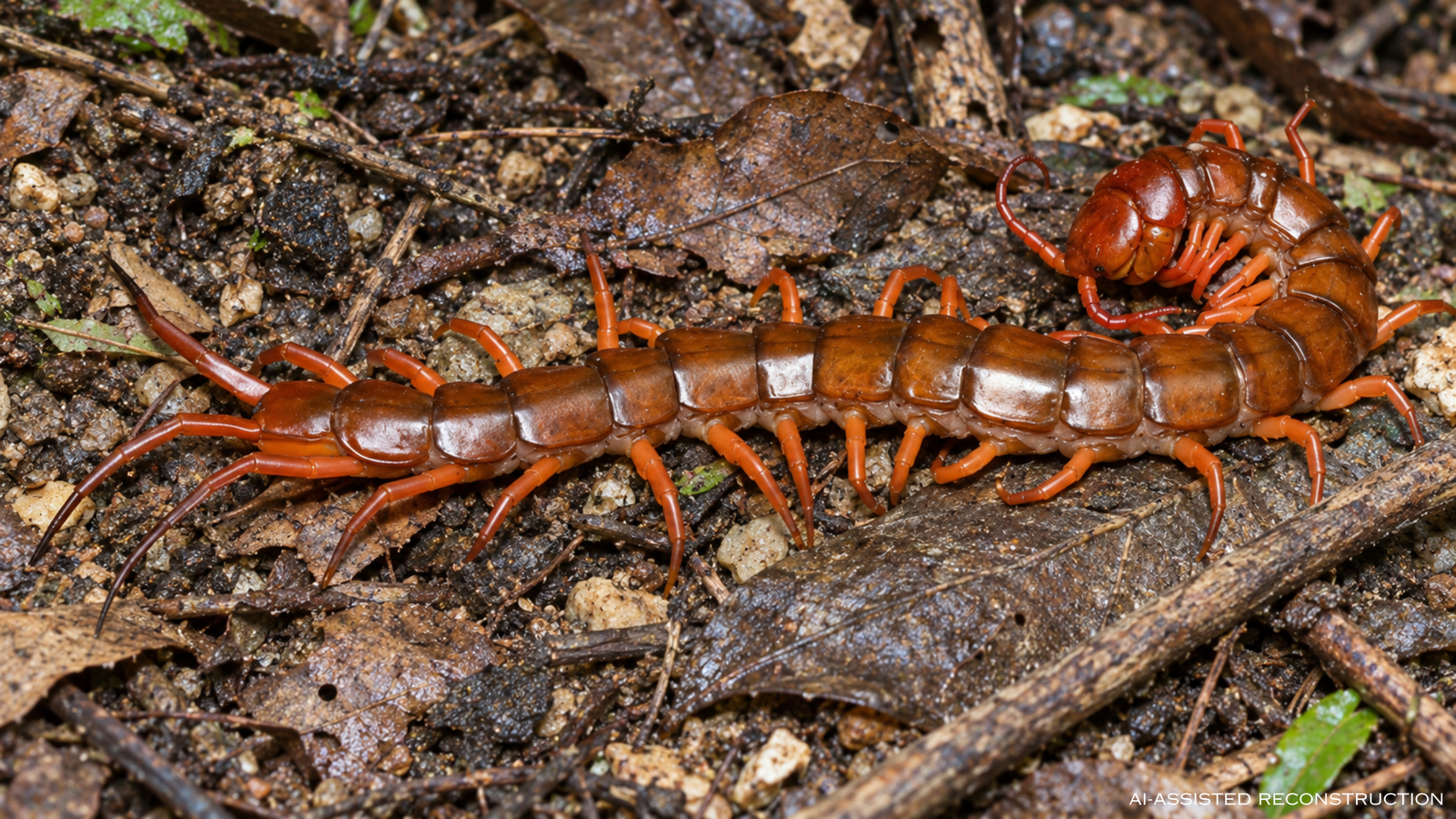
Scolopendra dehaani is one of Asia's largest centipedes, recognized by its powerful build, flattened body, and highly variable leg coloration. Some populations display yellow legs, while others develop striking orange or red tones. Beneath that appearance is an efficient predator equipped with venom-bearing forcipules.
But its hunting behavior is more versatile than many keepers expect. Field researchers have documented individuals capturing prey during daylight and climbing trees with small vertebrates. These observations reveal an opportunistic hunter that is not strictly confined to the forest floor.
Natural History & Behavior
Distribution
Widespread across mainland and parts of island Southeast Asia, with records extending into southern China, Japan, and parts of South Asia. Populations vary considerably in coloration and some morphological features. The species was previously classified as a subspecies of Scolopendra subspinipes.
Habitat
Found in tropical forests, woodland edges, and some disturbed habitats. It shelters beneath logs, stones, leaf litter, and within soil cavities where moisture is retained. Although associated with humid environments, it also occurs in seasonally dry forests where sheltered microhabitats provide protection from desiccation.
Defensive Behavior
Usually attempts to escape when disturbed but may turn and strike when cornered or restrained.
Its venom-bearing forcipules can deliver an extremely painful bite, potentially causing substantial swelling and other medical complications.
Never handle this species directly. Use long tools, a secure catch container, and a planned escape-free maintenance procedure.
Webbing & Burrowing
Unlike spiders, centipedes do not produce silk retreats. Scolopendra dehaani shelters beneath cover and excavates spaces within suitable substrate.
Young specimens often remain concealed, and established adults may disappear underground for extended periods. Surface activity is generally more noticeable after dark, particularly when hunting.
However, wild observations confirm occasional climbing and even arboreal predation. In captivity, it is best appreciated as an active predator rather than a consistently visible display animal.
Species Details
Temperament
Very Defensive
Lifespan
Both sexes can survive for several years in captivity. Reliable species-specific estimates separating male and female longevity remain limited.
Taxonomy
Animalia > Arthropoda > Chilopoda > Scolopendromorpha > Scolopendridae > Scolopendrinae > Scolopendra > Scolopendra dehaani
Husbandry
Enclosure
Begin with a compact, escape-proof enclosure that allows a juvenile to locate food without excessive searching. Provide several inches of substrate, a secure retreat, and fine ventilation openings.
Increase floor space and substrate depth as the centipede grows. Adults benefit from approximately 16 × 12 inches of floor space, with enough depth for substantial burrowing.
A tightly secured lid is essential. This species can climb enclosure surfaces and exploit surprisingly small gaps. House individuals separately.
Substrate
Use a moisture-retentive mixture of pesticide-free topsoil and coco fiber, optionally incorporating leaf litter and decayed hardwood.
Provide enough depth for burrowing, increasing it as the centipede grows. Keep the lower layers lightly moist while allowing some surface variation.
The substrate should hold its structure without becoming saturated. Constantly wet conditions combined with poor ventilation encourage deterioration and fungal growth.
Feeding
Newly independent juveniles can begin with small roach nymphs, appropriately sized crickets, or suitable pieces of freshly pre-killed insect prey.
As they grow, introduce larger feeders while monitoring appetite and body condition. Established adults readily take roaches, crickets, and other suitable invertebrates.
This species can overpower relatively large prey, including small vertebrates in nature. Such prey is unnecessary as a routine captive diet.
Feed according to size, appetite, and condition. Remove uneaten prey, especially when molting approaches.
Water
Maintain a consistently accessible moist area within the substrate, particularly for small juveniles that are vulnerable to dehydration.
Very young specimens can obtain moisture from appropriately damp substrate and tiny accessible droplets. Avoid standing pools and excessively wet conditions.
As the centipede grows, provide a stable, shallow water dish with clean water. Hydration depends on both drinking opportunities and suitable substrate moisture.
Molting
Premolt often involves reduced feeding, increased hiding, and prolonged inactivity. A centipede may seal itself inside a subterranean retreat before shedding.
Do not excavate a hidden specimen to check its condition. Maintain suitable moisture and remove uneaten live prey.
After molting, the new exoskeleton and forcipules need time to harden. Resume feeding only after normal movement and feeding responses return.
Breeding & Reproduction
Breeding Scolopendra dehaani is challenging, particularly because males and females are difficult to distinguish externally and introductions carry significant risk.
The real challenge begins after reproduction. Females construct secluded brood chambers and coil around their developing young. Field observations have documented this maternal behavior, while captive reports show that disturbance can result in brood loss.
One breeder reported separating 51 young centipedes from a captive brood. This represents a single keeper record, not an established average clutch size.
Successful reproduction depends heavily on accurate identification, safe introductions, suitable nesting conditions, and minimal disturbance during maternal care.