← Back to Species Database
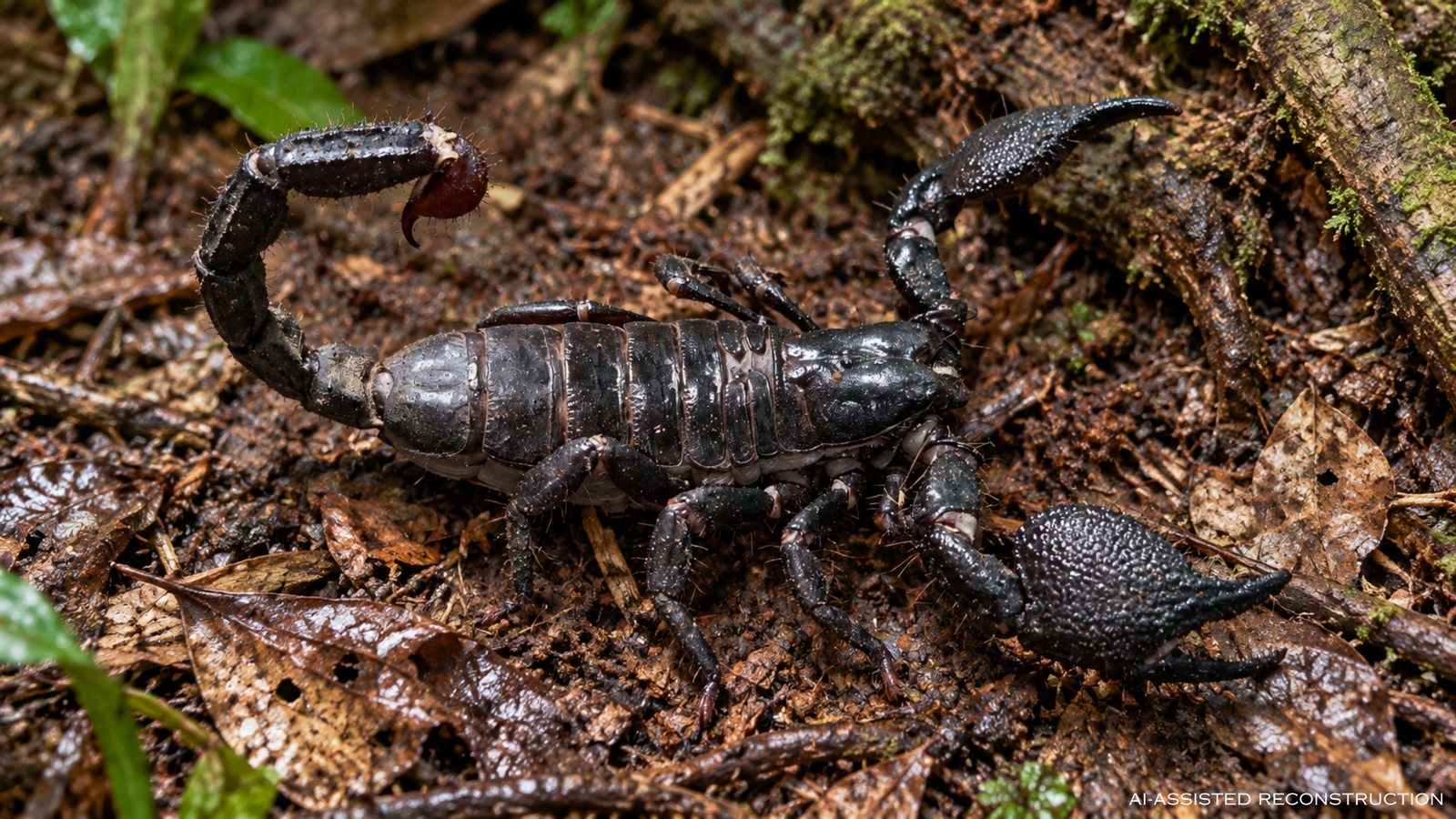
Emperor Scorpion
Pandinus imperator
A massive West African forest scorpion known for powerful claws, underground burrows, and remarkable maternal care.
LIFESTYLE: Fossorial
DIFFICULTY: Intermediate
ADULT SIZE: 6–8 inches (15–20 cm) total length
GROWTH RATE: Slow
TEMPERATURE: 24–28°C (75–82°F)
HUMIDITY: 75–90% RH; maintain moist lower substrate and good ventilation.
About This Species
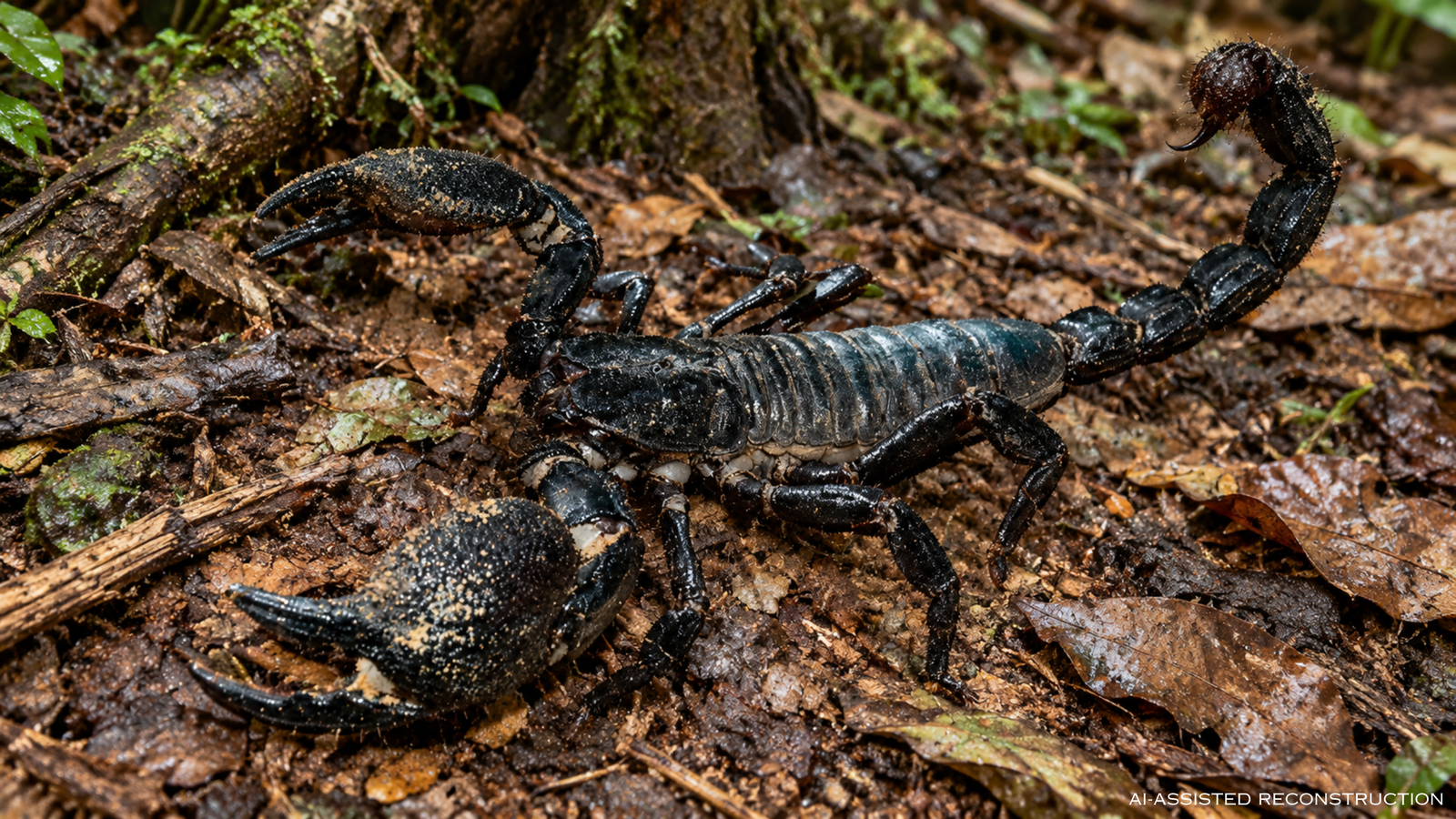
Glossy black and powerfully built, the Emperor Scorpion is among the world's largest scorpions. Its massive pincers are its primary hunting weapons, allowing it to overpower prey with relatively little reliance on its sting.
But its most remarkable trait is behavioral. Unlike many scorpions, Pandinus imperator can maintain extended family associations. Research has documented mothers sharing captured prey with their young, improving juvenile growth and survival.
Natural History & Behavior
Distribution
Native to tropical West Africa, including Ghana, Togo, Benin, Côte d'Ivoire, Guinea, Liberia, and Nigeria. Primarily associated with humid forest environments.
Habitat
Inhabits tropical forests, woodlands, and sheltered ground beneath logs, roots, and termite mounds. Underground burrows provide protection and stable moisture.
Defensive Behavior
Usually retreats or raises its powerful pincers when threatened. Pinches can be painful, and stings are possible despite the species' comparatively mild venom. Females guarding young may become more defensive.
Webbing & Burrowing
Constructs substantial burrows beneath natural shelters and may remain concealed for long periods. In captivity, deep substrate encourages excavation. Group tolerance occurs, but cannibalism remains possible.
Species Details
Temperament
Calm
Lifespan
Approximately 4–9 years in captivity, with individual variation.
Taxonomy
Animalia > Arthropoda > Arachnida > Scorpiones > Scorpionidae > Pandininae > Pandinus > Pandinus imperator
Husbandry
Enclosure
A secure, low terrestrial enclosure with generous floor space. Adults benefit from approximately 12 × 10 inches or larger, with deep substrate, a stable hide, and a water dish. House individuals separately unless experienced with group management.
Substrate
Provide 4–6 inches or more of moisture-retaining topsoil mixed with coco fiber and leaf litter. Keep deeper layers moist and stable for burrowing without waterlogging.
Feeding
Feeds on insects and other small invertebrates. Offer appropriately sized roaches or crickets, adjusting frequency to growth and body condition. Remove uneaten prey.
Water
Provide established juveniles and adults with a shallow dish of clean water. Tiny scorplings can access moisture through fine droplets or damp substrate without deep standing water.
Molting
Juveniles may refuse food and remain hidden before molting. Maintain suitable moisture, remove uneaten prey, and avoid disturbance until the new exoskeleton hardens. Mature adults no longer molt.
Breeding & Reproduction
Courtship involves a male depositing a spermatophore, which the female takes up. Reproduction is slow, with published mating-to-birth intervals of 298–455 days.
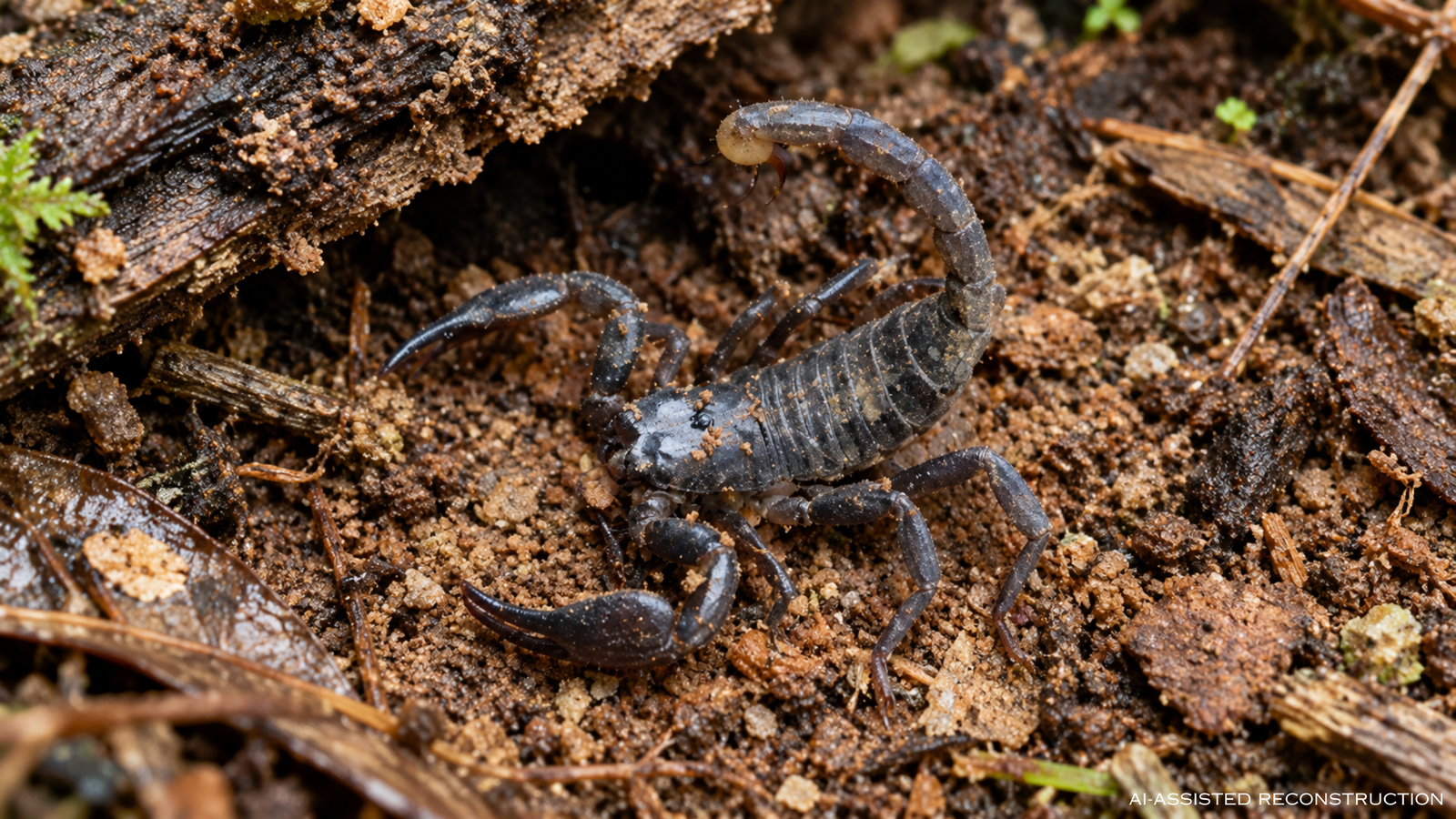
Females give birth to live young, with reported broods often around 20–30 scorplings. Newborns ride on the mother's back through their first molt.
Unusually, young may remain associated with their mother afterward, sharing prey she captures. This extended maternal care is documented scientifically, although communal housing still carries risks.