
ArachNeeds — Philippine Invertebrate Platform
← Back to Species Database

Deathstalker Scorpion

Leiurus quinquestriatus

A pale desert scorpion with slender pincers, nocturnal hunting habits, and medically significant venom that demands experienced, secure husbandry.

LIFESTYLE: Terrestrial
DIFFICULTY: Advanced
ADULT SIZE: 3.1–4.3 inches (8–11 cm) total length.
GROWTH RATE: Moderate
TEMPERATURE: 24–29°C (75–84°F)
HUMIDITY: No fixed RH% requirement established. Keep the surface mostly dry with localized moisture.

About This Species

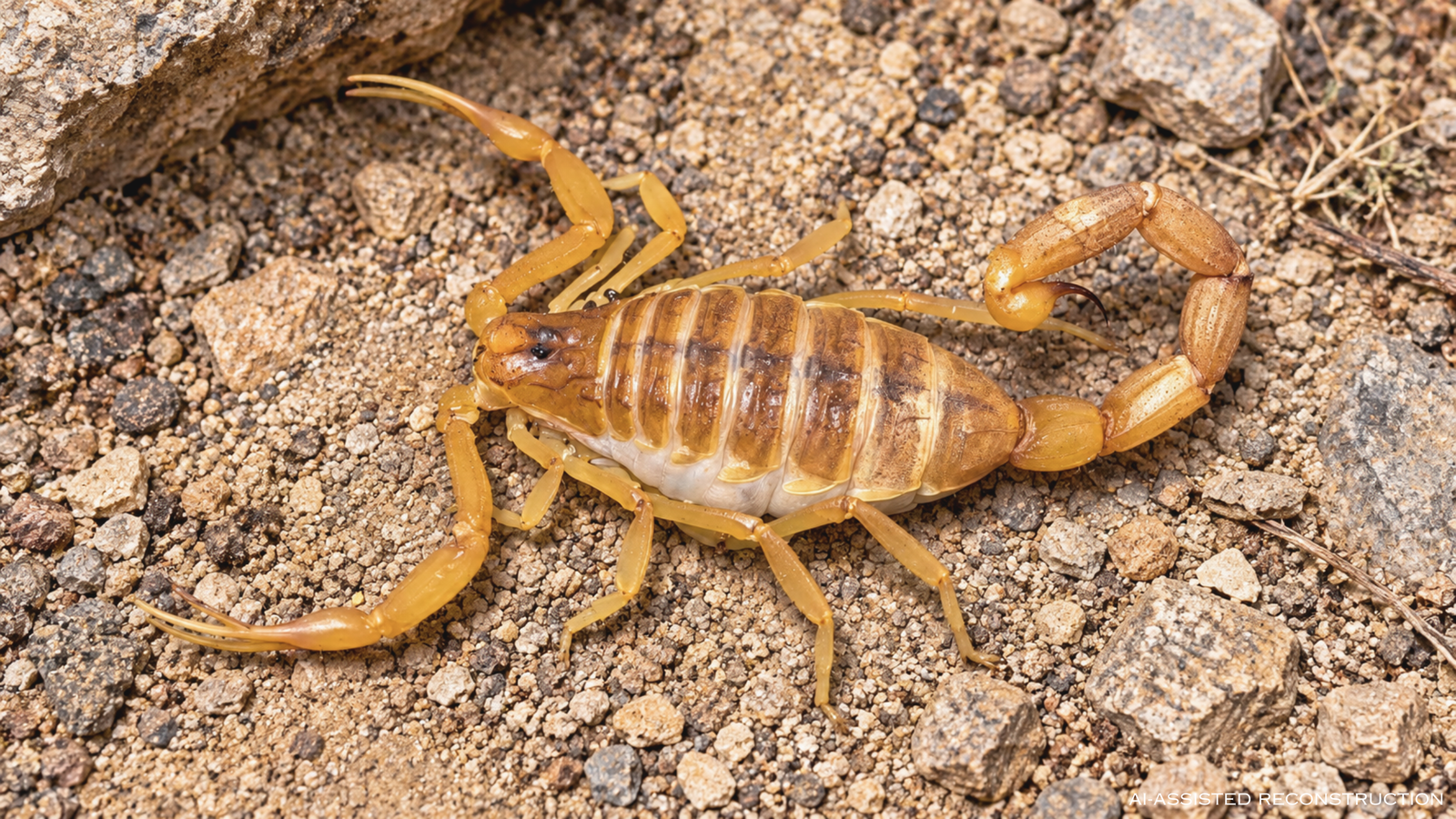
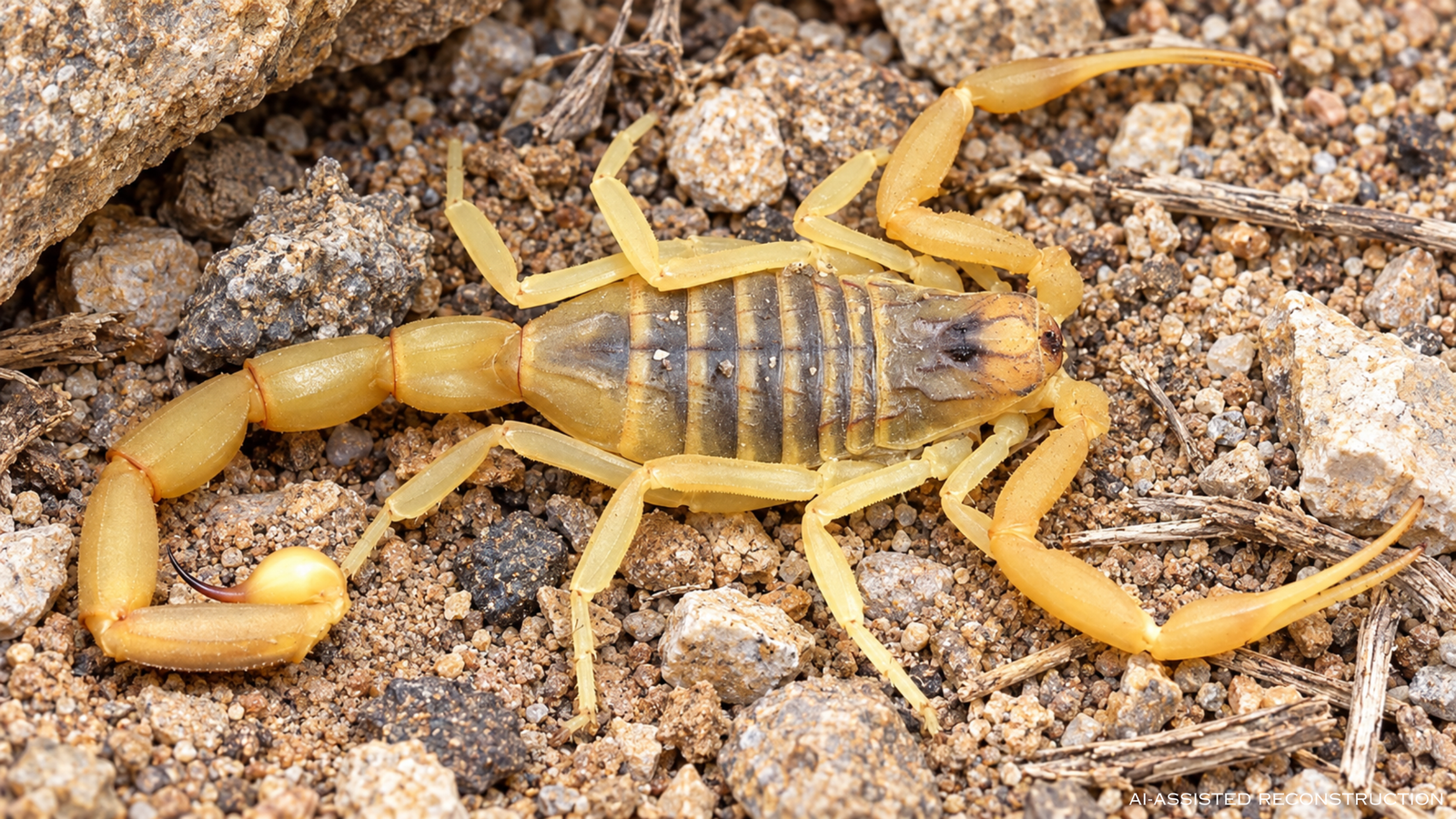
The Deathstalker is a pale yellow scorpion with slender pincers, a narrow body, and a powerful venom-delivery system. Its appearance reflects life in dry environments, where concealment and efficient hunting are essential.

But its reputation tells only part of the story.

Rather than spending the day exposed, Leiurus quinquestriatus typically remains sheltered and becomes active after dark. It detects prey through specialized sensory structures and responds quickly to nearby movement. Its venom has attracted considerable scientific attention, while revisions to the genus have revealed that the familiar Deathstalker name once covered several different species.
Natural History & Behavior

Distribution

Native to Egypt and Sudan. Older references report a much wider distribution across North Africa and the Middle East. However, taxonomic revisions have separated several formerly included populations into distinct species, including Leiurus hebraeus. The identity of some Sinai populations also requires further study.

Habitat

Occupies arid and semi-arid environments with rocky ground, compact soil, and scattered stones. During the day, it shelters beneath rocks, inside existing cavities, or in shallow excavations. These retreats provide protection from extreme surface temperatures and water loss.

Defensive Behavior

Usually relies on concealment or retreat when disturbed. If threatened at close range, it may raise its metasoma, move rapidly, and sting. Individual responses vary, but the venom is medically significant and can cause life-threatening complications. Direct handling is inappropriate, even when a specimen appears calm.

Webbing & Burrowing

It uses spaces beneath rocks, abandoned burrows, and shallow excavations for shelter. Young specimens often remain concealed in tight refuges. Established adults may emerge after dark to hunt but frequently spend daylight hours hidden. In captivity, a secure hide and substrate that supports shallow excavation are more valuable than an open display setup. Activity is best observed at night.

Species Details

Temperament

Defensive

Lifespan

Reliable sex-specific captive lifespan averages are not established for confirmed L. quinquestriatus. Adult females may survive longer than males, but commonly repeated lifespan estimates lack strong species-specific documentation.

Taxonomy

Animalia > Arthropoda > Arachnida > Scorpiones > Buthidae > Leiurus > Leiurus quinquestriatus

Husbandry

Enclosure

Begin with a small, escape-proof enclosure suited to the scorpling's size. Provide a tight refuge, adequate ventilation, and enough room to move without unnecessary open space. Increase floor area gradually as the animal grows. Adults benefit from a low terrestrial enclosure with secure hides and a firmly locking lid. Containment is essential. Use a secondary barrier during transfers and maintenance, and avoid openings through which the scorpion or its prey could escape.

Substrate

Use a firm mixture of sand and soil that supports shallow digging. Loose sand alone may collapse around excavated retreats. Maintain a predominantly dry surface while allowing a small section beneath a hide to retain some moisture. Younger specimens need access to hydration without a constantly wet enclosure. Established adults should have both dry shelter and a localized moisture option.

Feeding

Once scorplings have completed their first molt and left the mother's back, offer tiny live insects such as small roach nymphs or crickets. Increase prey size as the scorpion develops. Juveniles may accept appropriately sized feeders regularly, while established adults often require less frequent meals. Watch body condition and appetite rather than relying on a rigid schedule. Remove uneaten prey, especially when molting is approaching.

Water

Hydration remains important despite the species' desert habitat. For small scorplings, provide minute droplets on part of the enclosure wall or a lightly moistened patch beneath a refuge. Avoid large exposed droplets and deep dishes that could trap very small young. As the scorpion grows, introduce a shallow water dish and keep it clean. Maintain a localized damp area without saturating the entire substrate.

Molting

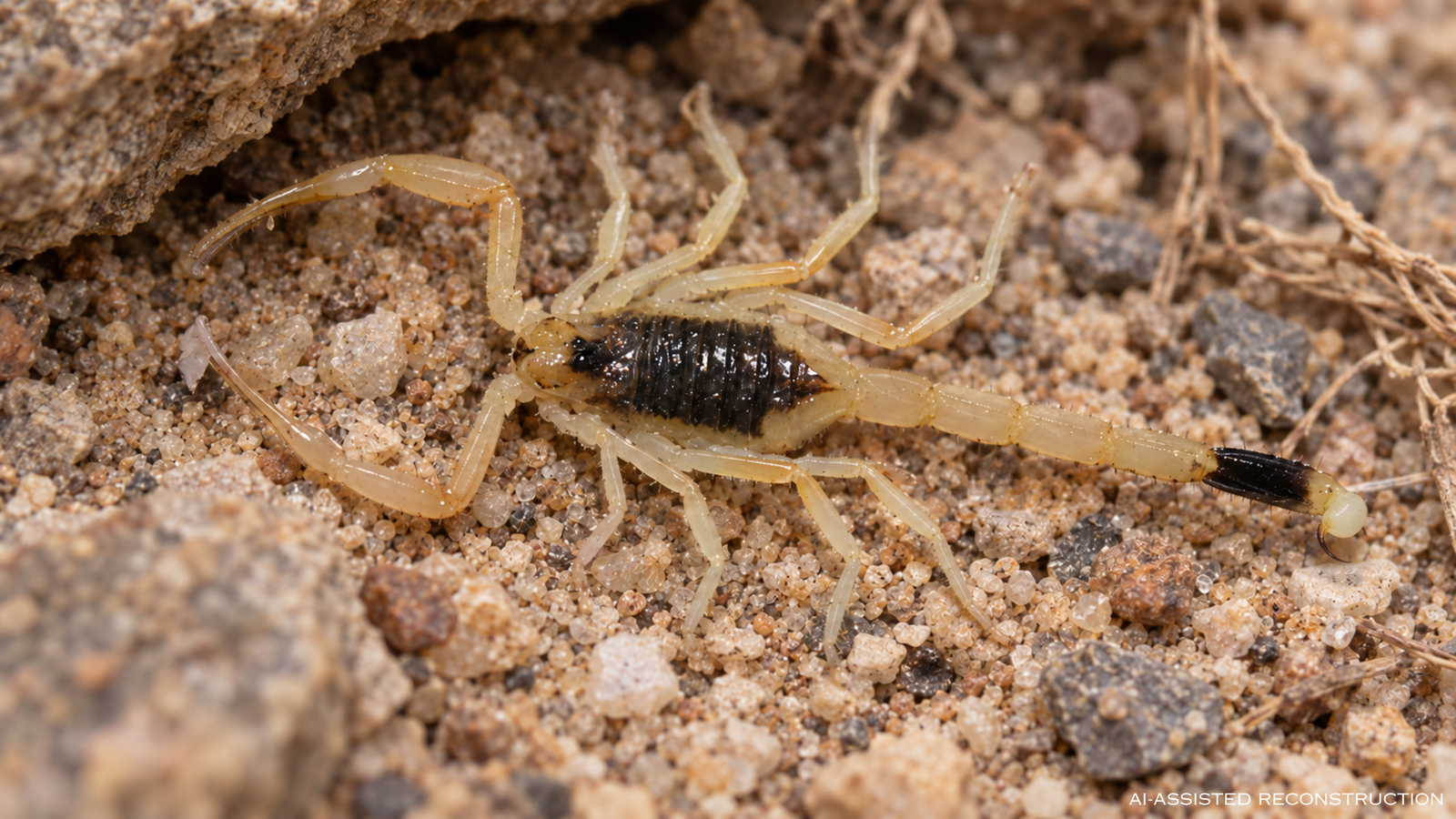
Reduced appetite, inactivity, and changes in body proportions may indicate an approaching molt. Remove uneaten prey and avoid disturbing the scorpion. Young specimens need access to suitable moisture without excessive wetness. Newborn scorplings initially remain on their mother's back and undergo their first molt before dispersing. Once independent, they can be established in individual enclosures. Adults no longer molt.

Breeding & Reproduction

Breeding requires secure containment, confirmed identification, and careful separation after mating. Courtship involves a male-led promenade and spermatophore transfer. The interesting part comes after mating. Unlike tarantulas, Deathstalkers give birth to live young. Published observations from Sudan recorded four litters of 35, 38, 39, and 40 scorplings. Another series involving nine females reported 41–82 offspring, while one separate female produced 99. Gestation can extend for several months. A 2009 captive study reported 155–227 days, although its combined Egyptian and Israeli specimens predated the recognition of L. hebraeus as a separate species. Those pooled results should not be treated as exclusive to L. quinquestriatus.

Life Stage Comparison

Male
Scorpling

EXPLORE

Species
News
Community
Collections

LEARN

Beginner Guides
Care Guides
Species Database
FAQ

SHOP & VISIT

Shop
Live Invertebrates
Visit Our Store
About ArachNeeds
Contact Us
© ArachNeeds
Privacy Policy · Terms · Shipping & Returns