← Back to Species Database
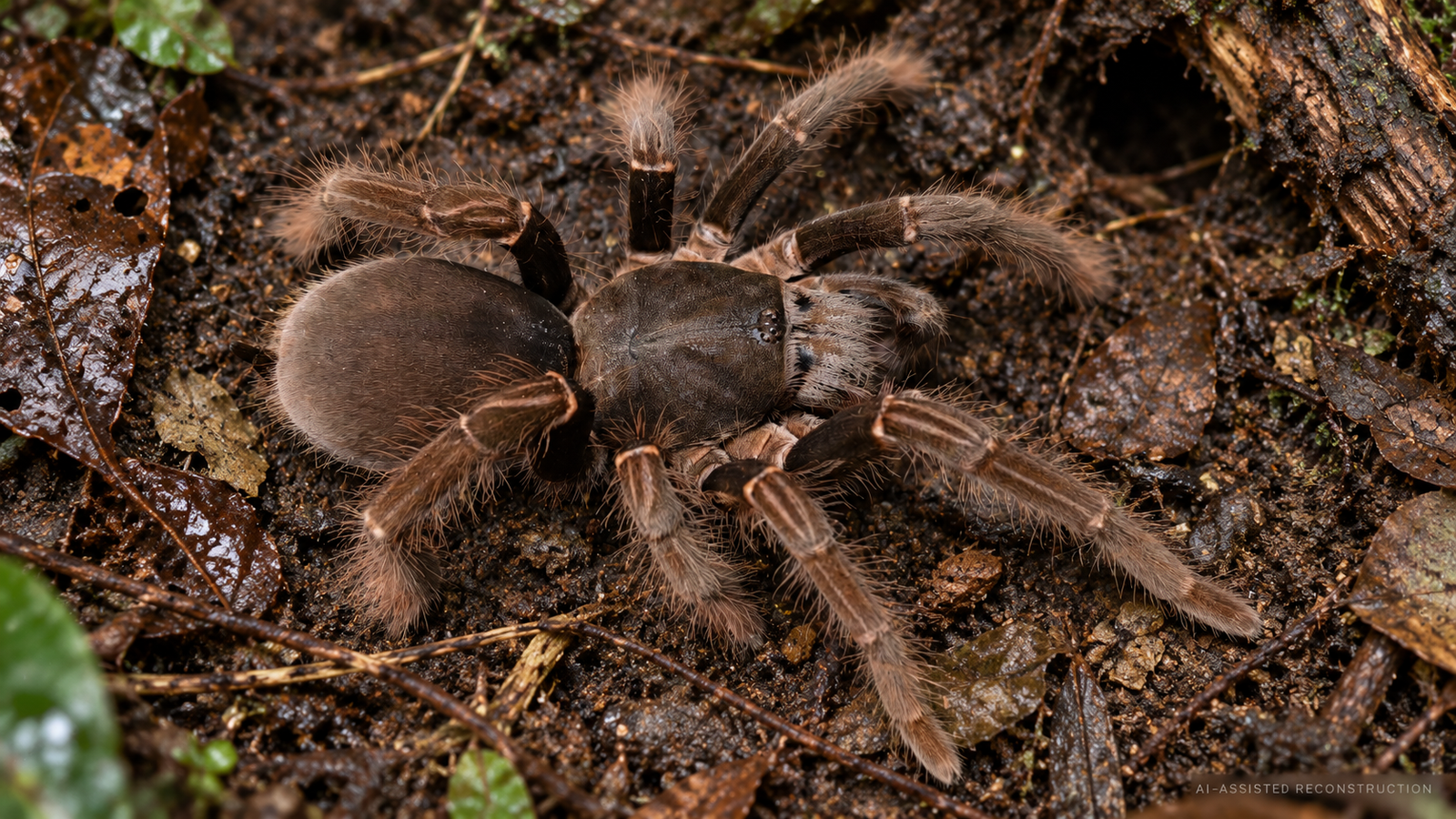
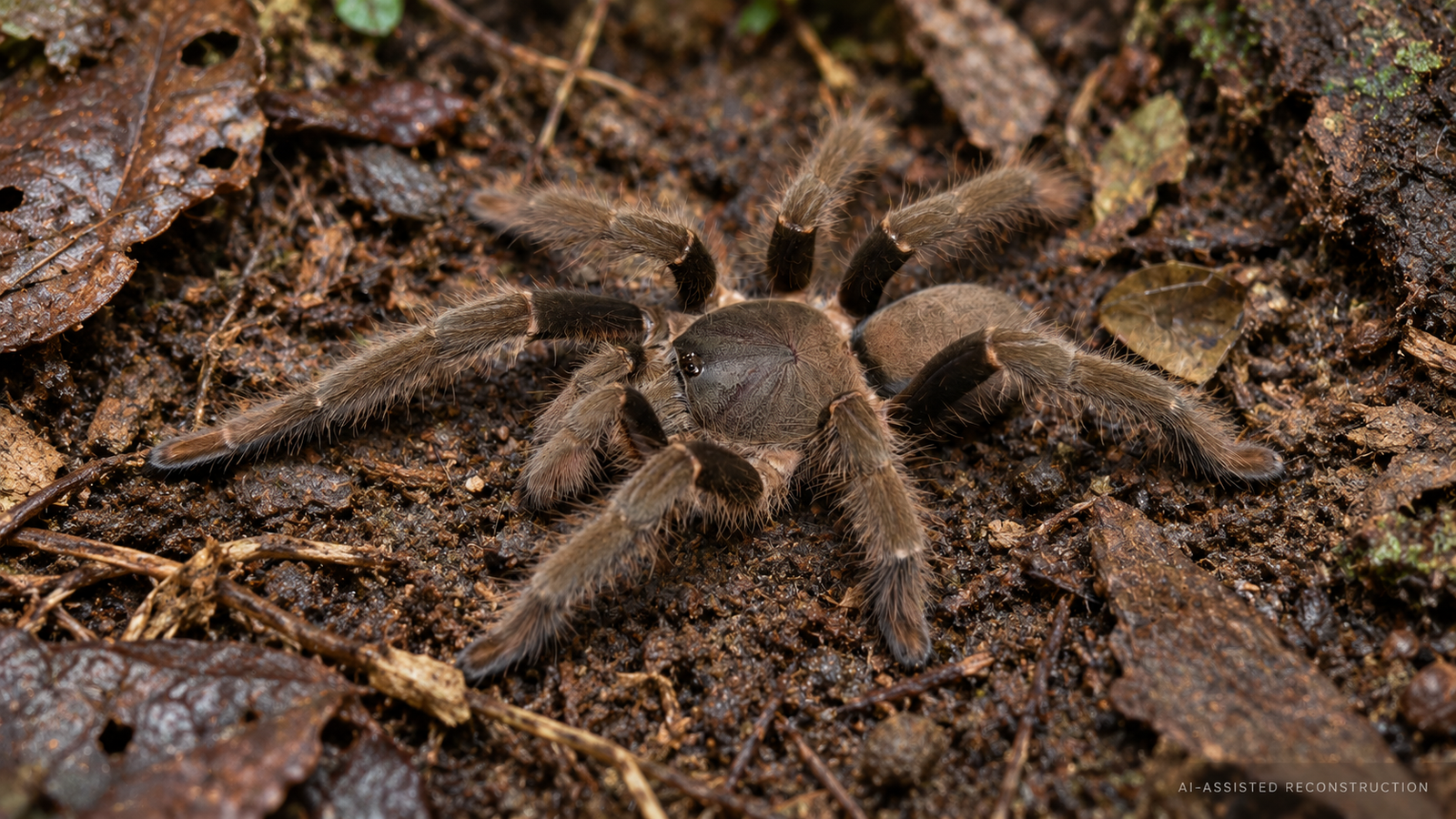
Cameroon Red Baboon Tarantula
Hysterocrates gigas
A powerful fossorial tarantula from Cameroon, built for deep burrows, humid forest conditions, and a mostly underground lifestyle.
LIFESTYLE: Fossorial
DIFFICULTY: Advanced
ADULT SIZE: About 6–7 in (15–18 cm) DLS, with particularly large females approaching 8 in (20 cm)
GROWTH RATE: Medium–Fast
TEMPERATURE: 24–29°C (75–84°F)
HUMIDITY: Moderate–High (deep moisture-retentive substrate; good ventilation essential)
About This Species
Hysterocrates gigas is one of the hobby’s most impressive African fossorial tarantulas. Large, powerful, and built to dig, it spends much of its life inside deep burrows where conditions remain stable and humid.
Here’s what makes it different: this is not the dry-country baboon spider many keepers picture when they think of African tarantulas. Its natural history is tied to humid Cameroonian forest environments, and its husbandry should reflect that. Reports of specimens entering water are fascinating, but deep substrate, stable moisture, and a secure burrow matter far more.
Natural History & Behavior
Distribution
Cameroon. Broader range claims appear in the hobby, but the currently accepted distribution is Cameroon, so locality claims beyond this should be treated cautiously.
Habitat
Humid tropical forest with deep soils suitable for burrowing. Much of this species’ life happens underground, where its burrow provides a stable, moisture-rich microclimate.
Defensive Behavior
Fast and potentially defensive when exposed. Like other Old World tarantulas, it lacks urticating hairs and relies on retreat, speed, threat displays, and biting when pushed further. Give it a secure burrow and retreat is often the first response.
Webbing & Burrowing
A serious excavator. Given enough substrate, Hysterocrates gigas can build deep tunnels, chambers, and silk-reinforced entrances.
That is part of the appeal. An established specimen may stay hidden for long periods, but the burrow itself becomes part of the experience of keeping this species.
Species Details
Temperament
Defensive
Lifespan
Females commonly around 10–15+ years; males considerably shorter-lived
Taxonomy
Animalia > Arthropoda > Arachnida > Araneae > Theraphosidae > Eumenophorinae > Hysterocrates > Hysterocrates gigas
Husbandry
Enclosure
Use a secure fossorial enclosure with plenty of substrate depth and limited fall distance. Adults need enough room to build a proper underground retreat rather than being forced to remain exposed.
A cork-bark starter hide can help guide the burrow toward one side of the enclosure. Secure access also matters because an exposed specimen can move extremely quickly.
Substrate
Use deep, compactable substrate that can hold tunnels without collapsing. A soil-based mix with coco fibre or peat works well when packed firmly.
Keep the lower layers moderately moist while allowing the surface to dry somewhat. The goal is a stable moisture gradient, not a constantly wet enclosure.
Feeding
Hysterocrates gigas usually has a strong feeding response. Appropriately sized roaches, crickets, locusts, and other suitable feeder insects are readily accepted.
Feed according to body condition rather than appetite alone. Remove uneaten prey and avoid leaving live feeders inside when premolt is suspected.
Water
Provide a clean water dish at all times. Occasional overflow on one side can help maintain moisture deeper in the substrate.
Here’s the important part: an aquatic section is not necessary. Even though specimens have been observed entering water, this is still fundamentally a fossorial terrestrial tarantula.
Molting
Molting often happens completely underground. A specimen may seal its burrow and disappear for weeks.
Leave it alone. Maintain the normal moisture gradient, remove accessible prey, and avoid digging into the retreat. Once the spider reappears, wait until the fangs have fully hardened before feeding.
Breeding & Reproduction
Pairing can be intense. Mature females are large and powerful, so the male should have room to retreat and introductions should be observed closely.
Egg-sac timing can vary considerably. Stable conditions and a well-conditioned female usually matter more than constant intervention.
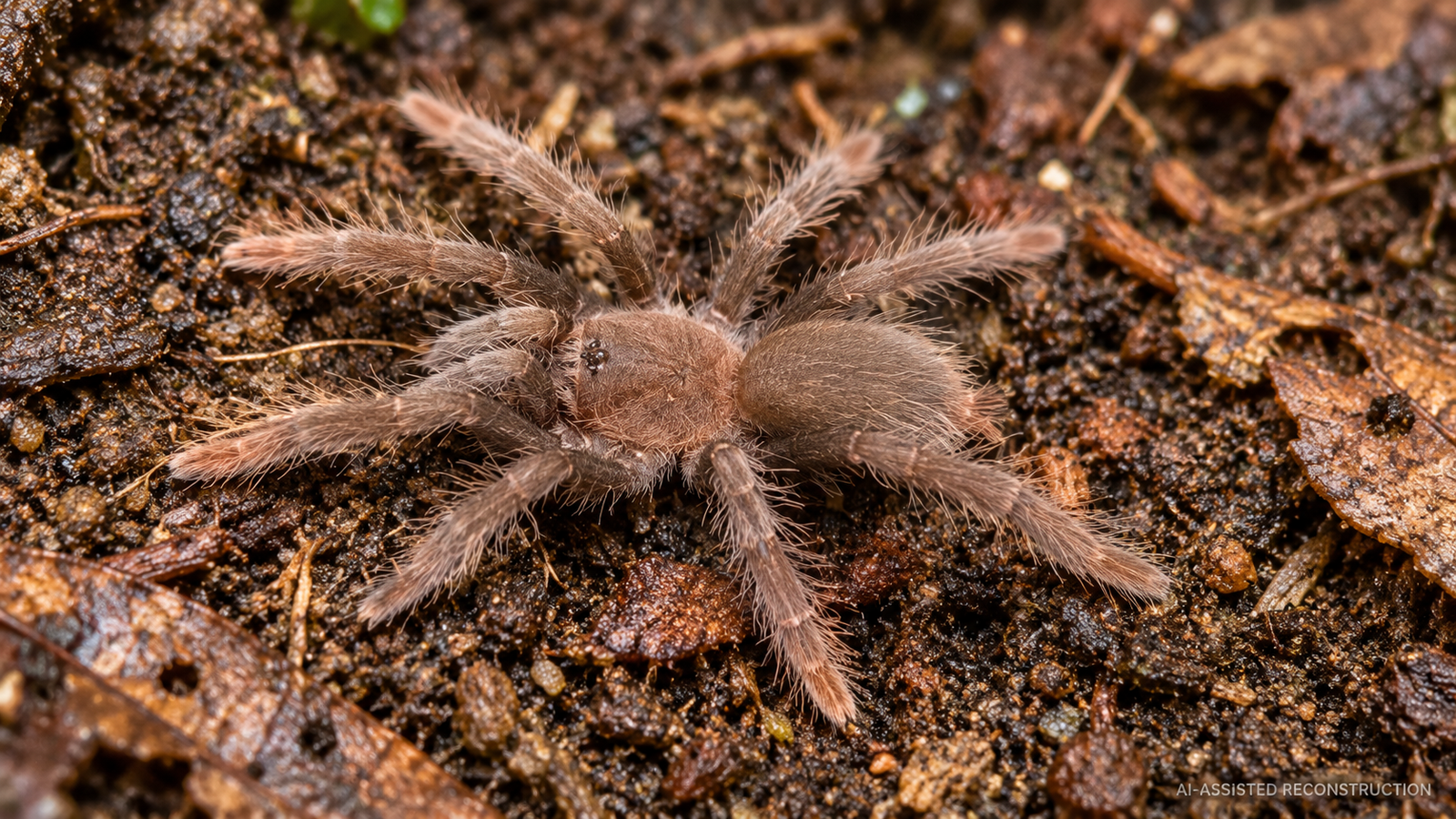
Hysterocrates gigas is also interesting for the tolerance sometimes seen among young spiderlings, including observations of individuals feeding around the same prey. Still, communal rearing should never be considered risk-free because cannibalism remains possible.