← Back to Species Database
Mexican Redleg Tarantula
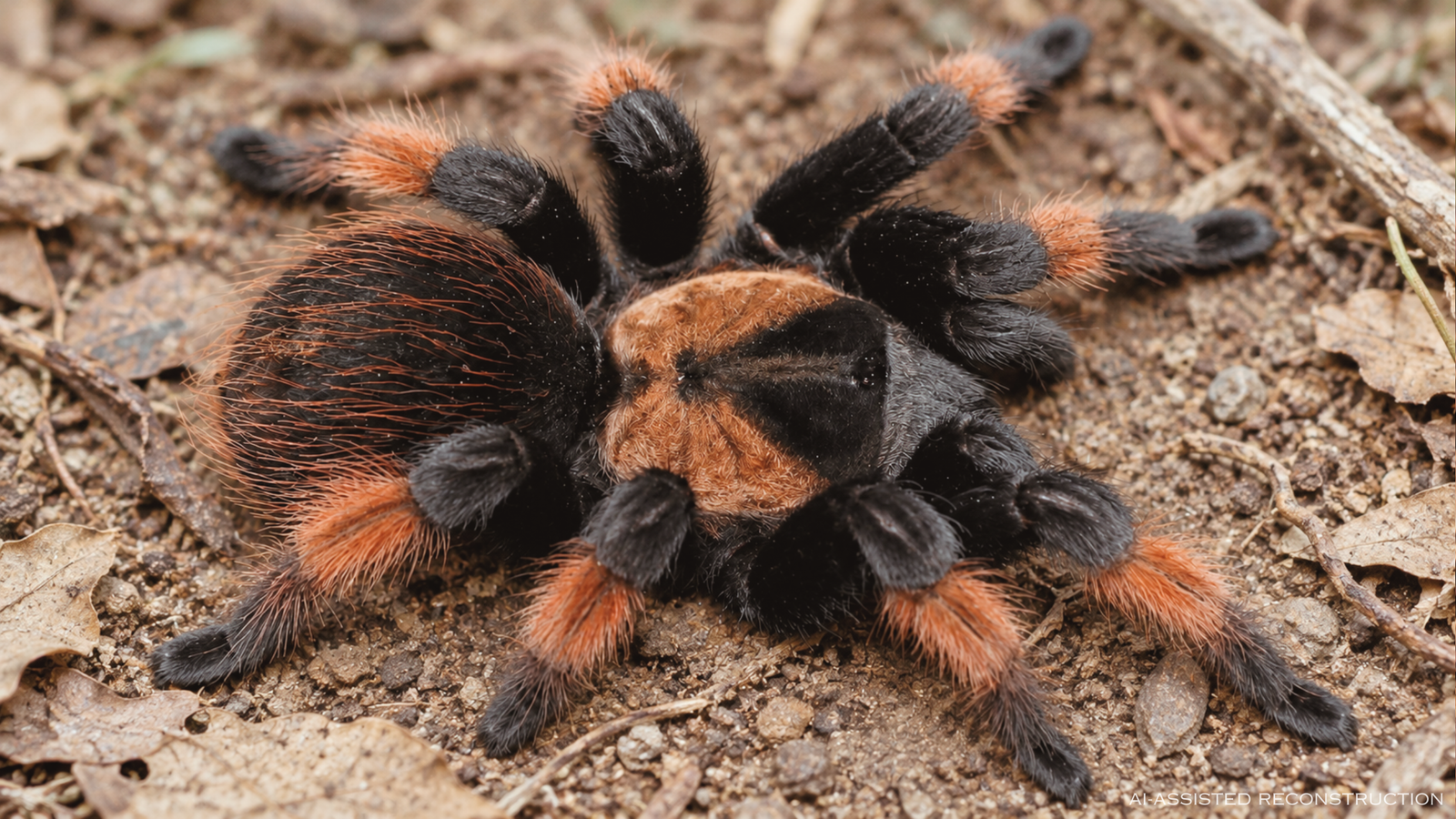
Brachypelma emilia
A slow-growing Mexican terrestrial known for its rusty-red legs, calm temperament, long lifespan, and strong burrowing instinct.
LIFESTYLE: Terrestrial
DIFFICULTY: Beginner
ADULT SIZE: About 5–6 in (13–15 cm) DLS, with particularly large females occasionally exceeding this
GROWTH RATE: Slow
TEMPERATURE: 24–29°C (75–84°F)
HUMIDITY: Low–Moderate (localized moisture for slings; good ventilation essential)
About This Species
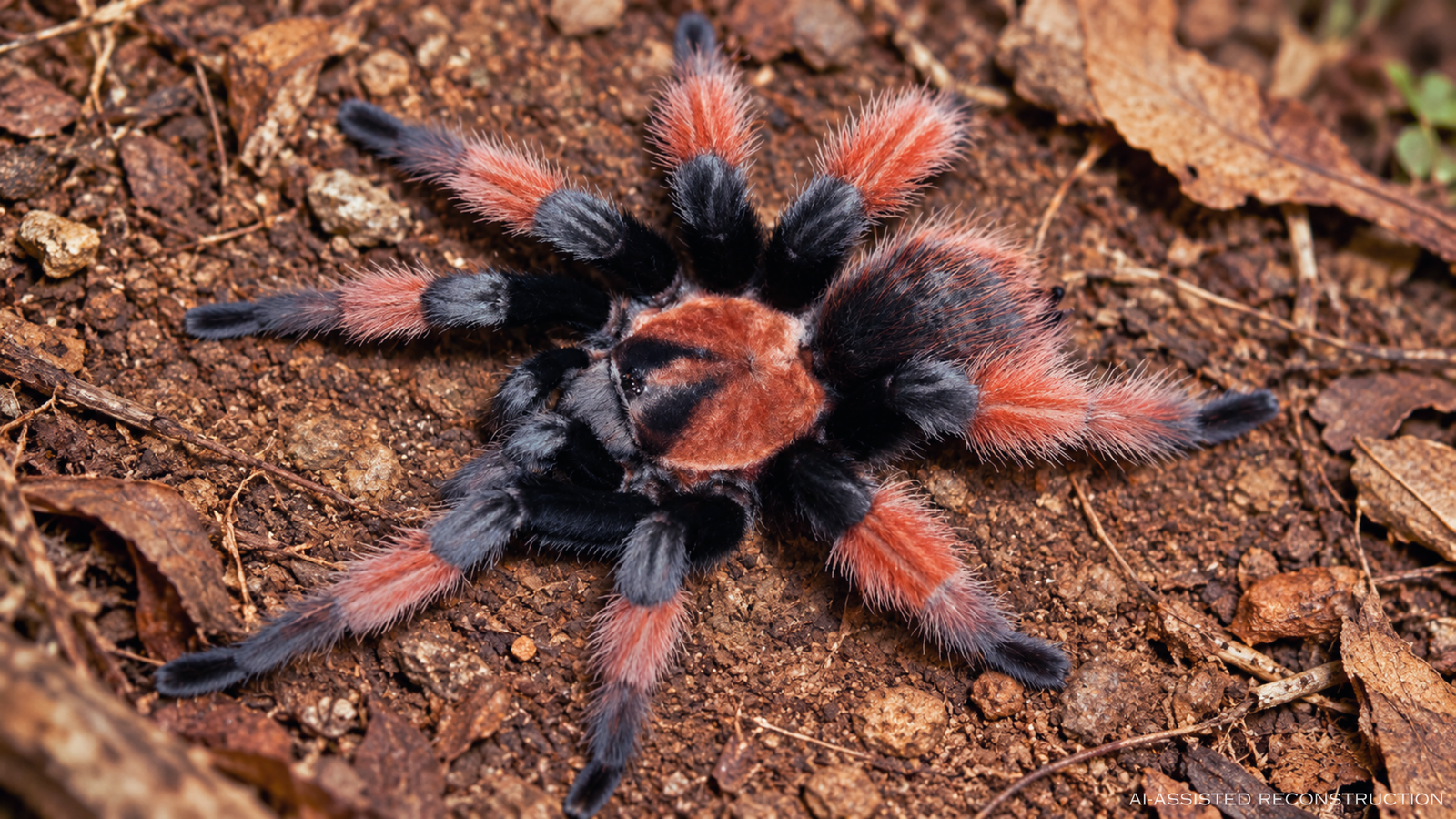
Brachypelma emilia is one of the classic Mexican tarantulas, easily recognized by its rusty-red legs and distinctive dark marking across the carapace. It is slow-growing, long-lived, and generally calm, making it a strong choice for newer keepers.
But there is more to it than appearance. This is a capable burrower from seasonally dry habitats, and juveniles in particular may spend considerable time underground. Give it enough substrate and a secure retreat, and much of its natural behavior begins to show.
Natural History & Behavior
Distribution
Western Mexico, from southern Sonora through Sinaloa and southwestern Nayarit, extending inland into western Durango.
Habitat
Seasonally dry tropical forest and semi-arid lowlands with compact soil, rocks, roots, and natural ground cover. Brachypelma emilia uses deep burrows beneath rocks, roots, and debris where conditions remain more stable than at the surface.
Defensive Behavior
Usually calm and deliberate, although individual temperament varies. When disturbed, Brachypelma emilia will often retreat or kick urticating hairs before escalating further.
Calm does not mean harmless. The hairs can be irritating, so handling should never be treated as part of normal husbandry.
Webbing & Burrowing
A terrestrial species with a stronger digging instinct than its often-visible captive behavior suggests. Spiderlings and juveniles may excavate extensively, while established adults commonly enlarge a starter retreat or remain near its entrance.
Webbing is usually restrained and concentrated around the burrow rather than spread heavily across the enclosure.
Species Details
Temperament
Calm
Lifespan
Females commonly 20+ years; males considerably shorter-lived
Taxonomy
Animalia > Arthropoda > Arachnida > Araneae > Theraphosidae > Theraphosinae > Brachypelma > Brachypelma emilia
Husbandry
Enclosure
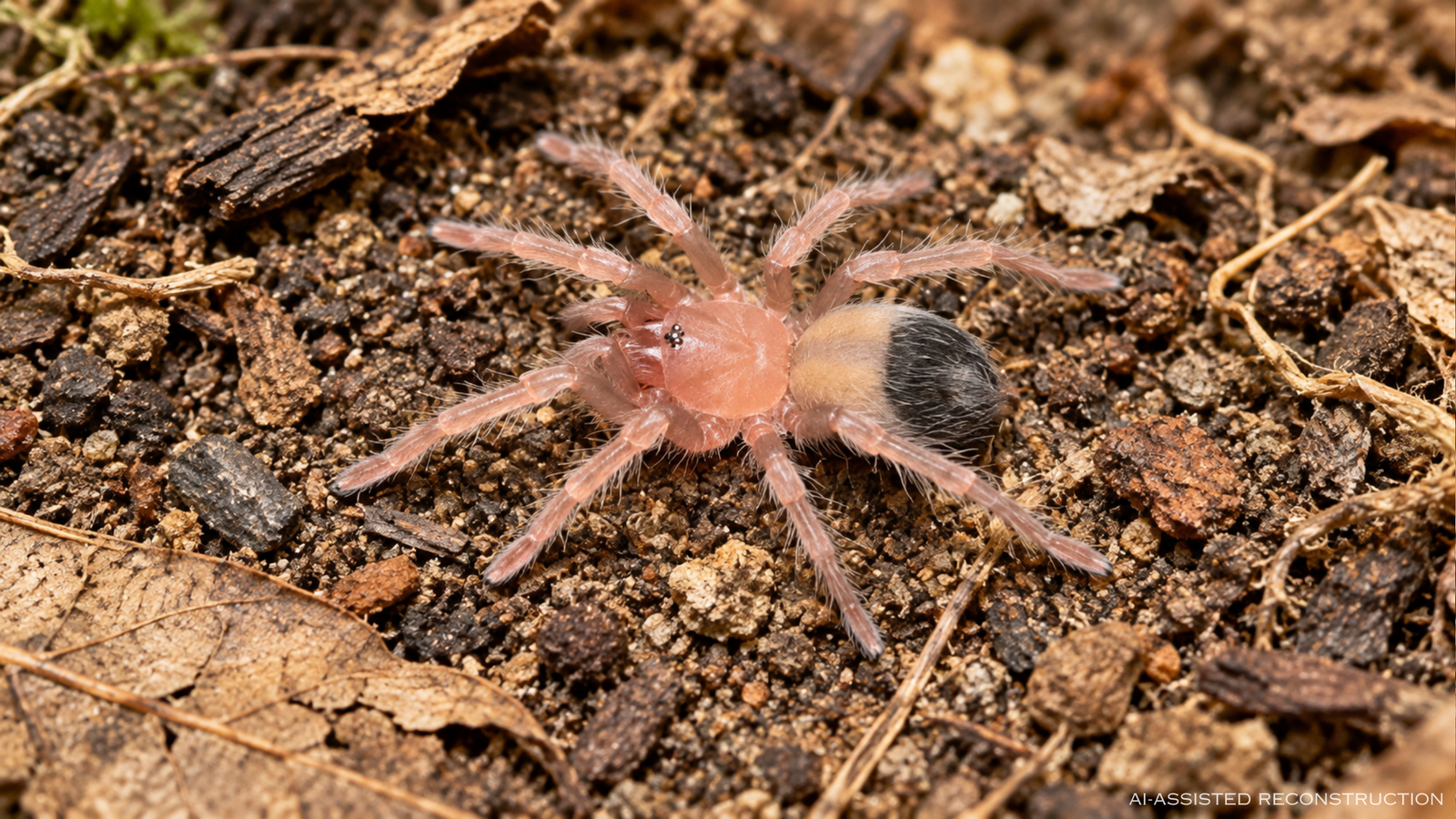
For very small slings, keep things simple. Use an appropriately sized enclosure with enough substrate to burrow and enough ventilation to prevent stagnant conditions.
As the spider grows, move to a low, wide terrestrial enclosure with deeper substrate, a secure hide, and limited climbing height. Heavy-bodied juveniles and adults can be injured by relatively short falls.
Substrate
Use compactable substrate that can support burrowing.
Here is the important part: small slings should not be kept completely dry. Keep one area slightly moist, or use a small patch of sphagnum moss to hold localized moisture.
As the spider reaches juvenile size, gradually shift toward the drier conditions preferred by established Brachypelma while still allowing some deeper moisture to remain.
Feeding
Spiderlings benefit from more frequent feeding while they are actively growing.
Offer prey they can confidently overpower, such as tiny crickets, small worms, or very small Blatta lateralis nymphs. Feeding around 2–3 times per week can work well while the sling is taking prey consistently.
Then watch the spider. Once feeding slows or stops, premolt is often approaching, and live prey should no longer be offered.
The goal is simple: move the sling through its smallest, more vulnerable stages efficiently. Once it reaches a safer juvenile size, ease back and feed according to abdomen size and overall body condition.
Water
Very small slings do not require a conventional water dish.
Instead, lightly mist one side of the enclosure, the wall, or a small patch of sphagnum moss. This provides accessible droplets and localized moisture without soaking the entire setup.
Here is the key: slings dry out faster than larger tarantulas. Avoid letting the enclosure remain completely dry for long periods.
Once the spider reaches a more established juvenile size, introduce a shallow water dish and gradually move toward the drier adult routine.
Molting
A sudden refusal of food is often the first clear sign that a molt is approaching.
Once that happens, stop feeding and remove any uneaten prey. Maintain localized moisture, especially for small slings, and leave the spider undisturbed.
After the molt, give the new exoskeleton and fangs time to harden before feeding again. Small slings may recover faster than larger juveniles and adults, but there is no need to rush the first meal.
As the spider grows, premolt periods often become longer and feeding frequency can be reduced according to body condition.
Breeding & Reproduction
Breeding rewards patience. Mature males become much more active after their ultimate molt and should be introduced only to a well-conditioned female, with enough room to retreat if the interaction changes.
In the wild, mating activity is associated with the transition from the rainy season into the drier months. Captive timing can vary, so female condition and stable husbandry matter more than forcing a strict schedule.