ArachNeeds — Philippine Invertebrate Platform
← Back to Species Database

Brazilian Whiteknee

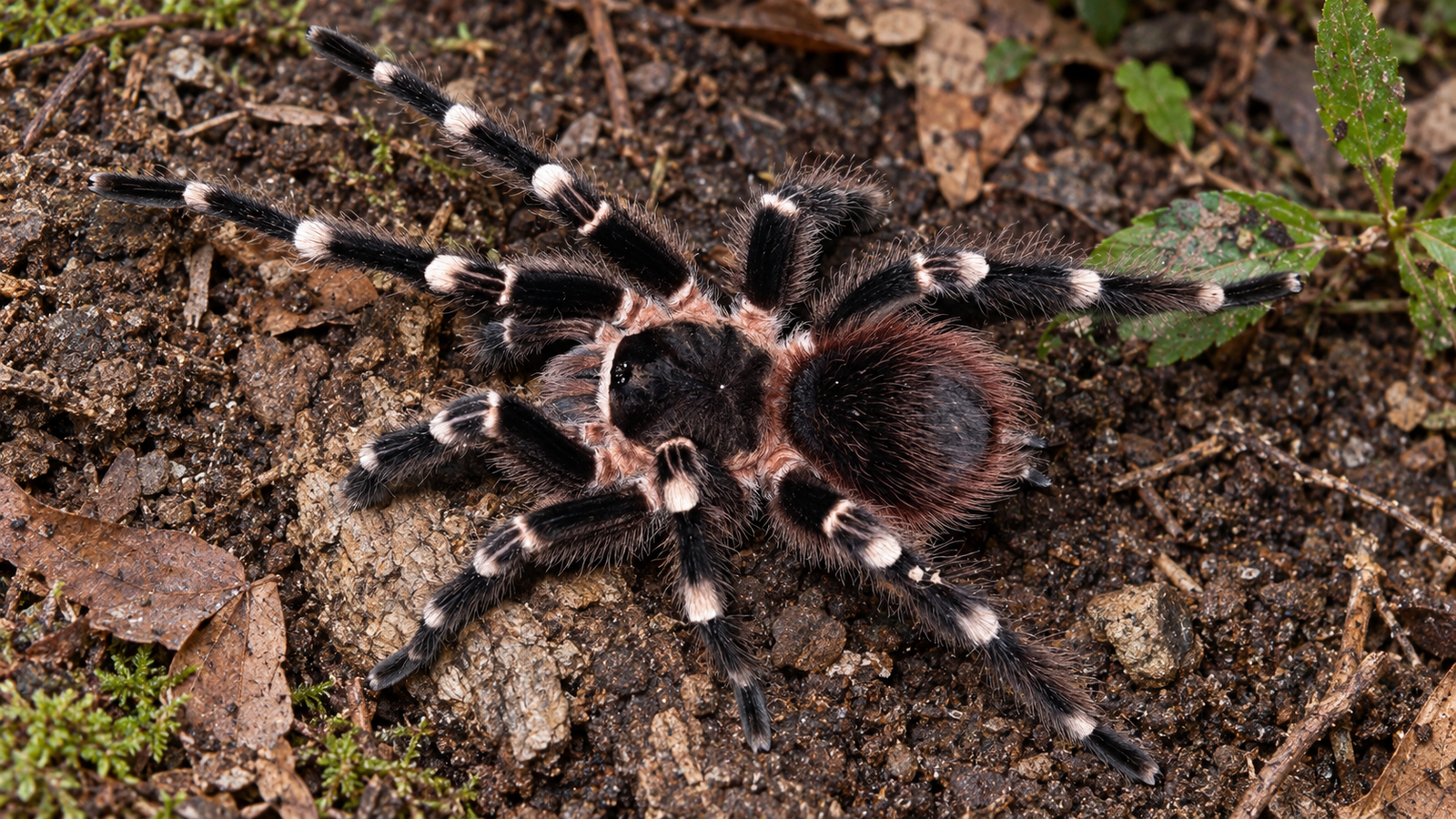
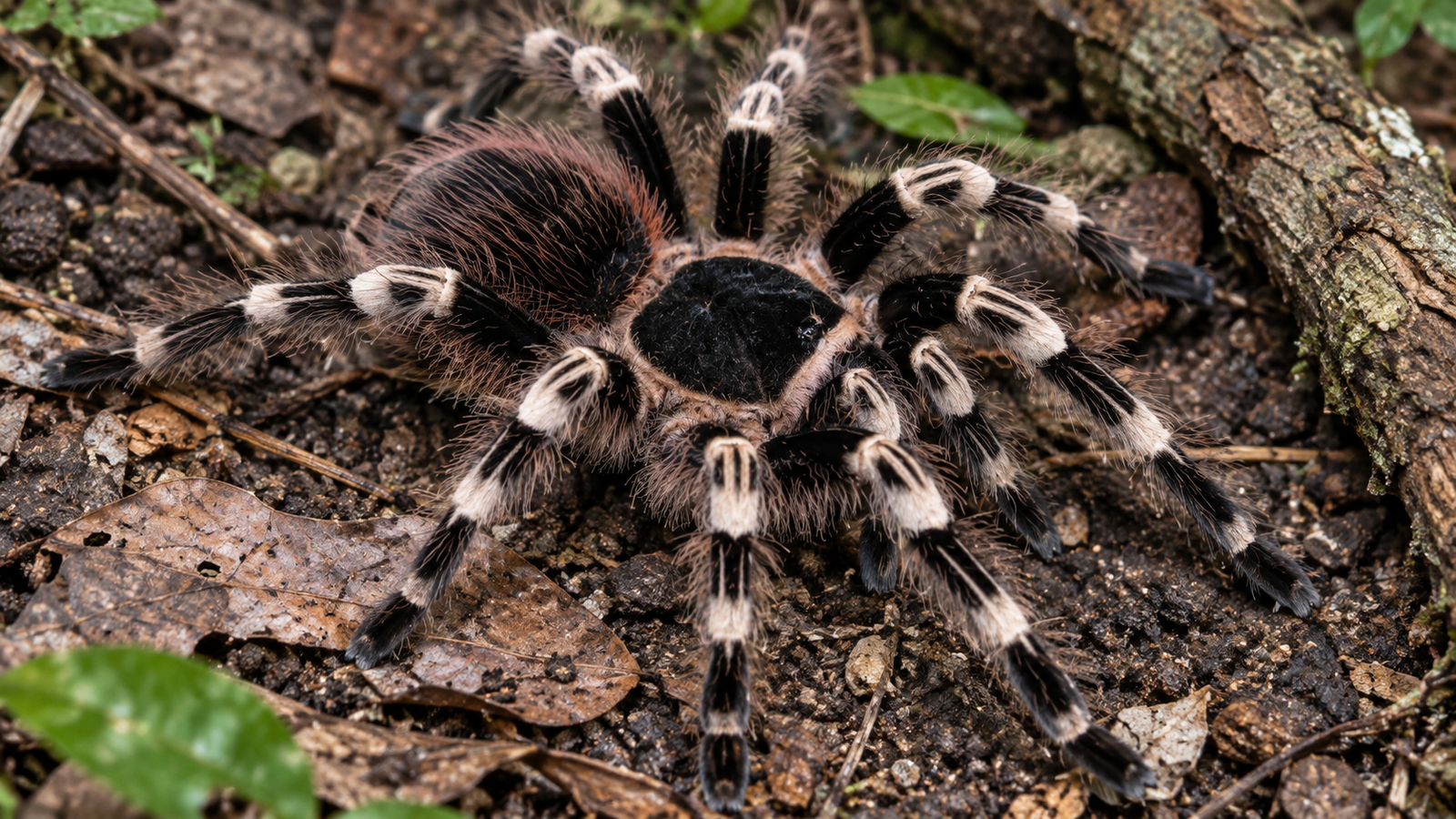
Acanthoscurria geniculata

A large terrestrial tarantula from Brazil, Acanthoscurria geniculata combines striking pale leg bands with a powerful feeding response and a burrow-oriented lifestyle. But its bold appearance comes with an important keeper consideration: this species can be highly reactive when disturbed and readily uses urticating setae.

Lifestyle: Terrestrial
Difficulty: Intermediate
Adult Size: about 7–8 in (18–20 cm) DLS
Growth Rate: Moderate to fast
Temperature: 24–29°C (75–84°F)
Humidity: Moderate (good ventilation essential)

About This Species

Acanthoscurria geniculata is one of the most recognizable South American tarantulas in the hobby, largely because of the broad pale bands crossing its otherwise dark legs. But the pattern is only part of the story. This is a large, heavily built terrestrial species with a strong feeding response and a natural tendency to use sheltered retreats and burrows. Females and juveniles have been documented in tubular burrows beneath rocks and fallen trunks, along ravines, and at ground level. In captivity, its combination of size, visibility, rapid feeding response, and relatively straightforward terrestrial husbandry makes it highly rewarding to keep — provided the enclosure is designed around its weight, digging behavior, and defensive capabilities.

Natural History & Behavior

Distribution

Brazil — documented from Rondônia, Roraima, Pará, and Mato Grosso

Habitat

Terrestrial tropical forest habitat; associated with the forest floor, fallen logs, rocks, ravines, and sheltered burrow sites

Defensive Behavior

Here’s the important part: a strong feeding response should not be confused with aggression. Acanthoscurria geniculata may retreat when given space, but disturbed specimens can rapidly kick urticating setae and may stand their ground when pressure continues. Biting is possible if defensive escalation is ignored. Give the spider space, use tools during maintenance, and treat every individual according to its actual behavior rather than the species’ reputation.

Webbing & Burrowing

Burrowing matters more than heavy display webbing here. Females and juveniles naturally occupy tubular retreats beneath rocks, fallen trunks, inside sheltered structures, along ravines, and at ground level. In captivity, expect excavation beneath a hide and some silk reinforcement around the retreat and surrounding substrate. Give it enough depth to modify the enclosure rather than forcing it to remain completely exposed.

Species Details

Temperament

Defensive

Lifespan

Females commonly estimated at about 12–15+ years; males roughly 3–4 years. Note: these are hobby-based captive estimates and are not strongly documented in primary literature.

Taxonomy

Animalia > Arthropoda > Arachnida > Araneae > Theraphosidae > Theraphosinae > Acanthoscurria

Husbandry

Enclosure

Think low, wide, and stable. Acanthoscurria geniculata is a large terrestrial tarantula, so usable floor space matters far more than climbing height. Provide a secure hide, enough substrate for excavation, and only limited space between the substrate surface and lid. That last point matters: a heavy-bodied terrestrial tarantula can be seriously injured by a fall onto hard décor or from excessive enclosure height.

Substrate

Use a deep, compactable substrate that can hold a retreat — coco fiber, soil-based mixes, or similar keeper-safe blends can all work. Aim for enough depth to permit meaningful digging, especially for juveniles and adults. Keep the lower layers capable of retaining some moisture while allowing the upper surface to remain less saturated.

Feeding

This is where Acanthoscurria geniculata earns its reputation. Feeding responses can be extremely fast and decisive. Offer appropriately sized roaches, crickets, or other suitable feeder insects and adjust frequency to the spider’s body condition rather than feeding simply because it will accept prey. Remove uneaten feeders, especially when premolt is suspected.

Water

Provide a clean water dish at all times. Adults should have a stable dish large enough to access easily, while juveniles can use smaller appropriately sized dishes. Overflowing the dish occasionally can help maintain a localized moisture gradient, but the enclosure should never remain continuously swampy.

Molting

When premolt signs appear, stop feeding and remove any live prey remaining in the enclosure. Keep water available and maintain stable conditions without disturbing the retreat. A large Acanthoscurria may remain inactive for an extended period around a molt. Wait until the new exoskeleton and fangs have hardened before resuming feeding.

Breeding & Reproduction

Pairing typically involves vibration-based courtship, with receptive females responding before allowing the male to approach and achieve insertion. Aggression is always possible, so the interaction should be closely observed. The remarkable part comes with the egg sac. A. geniculata can produce exceptionally large broods, with around 2,000 eggs documented from a single captive sac. In one study, females produced sacs about 10.5 weeks after mating, although timing and brood size can vary with female condition, feeding, temperature, and other environmental factors.

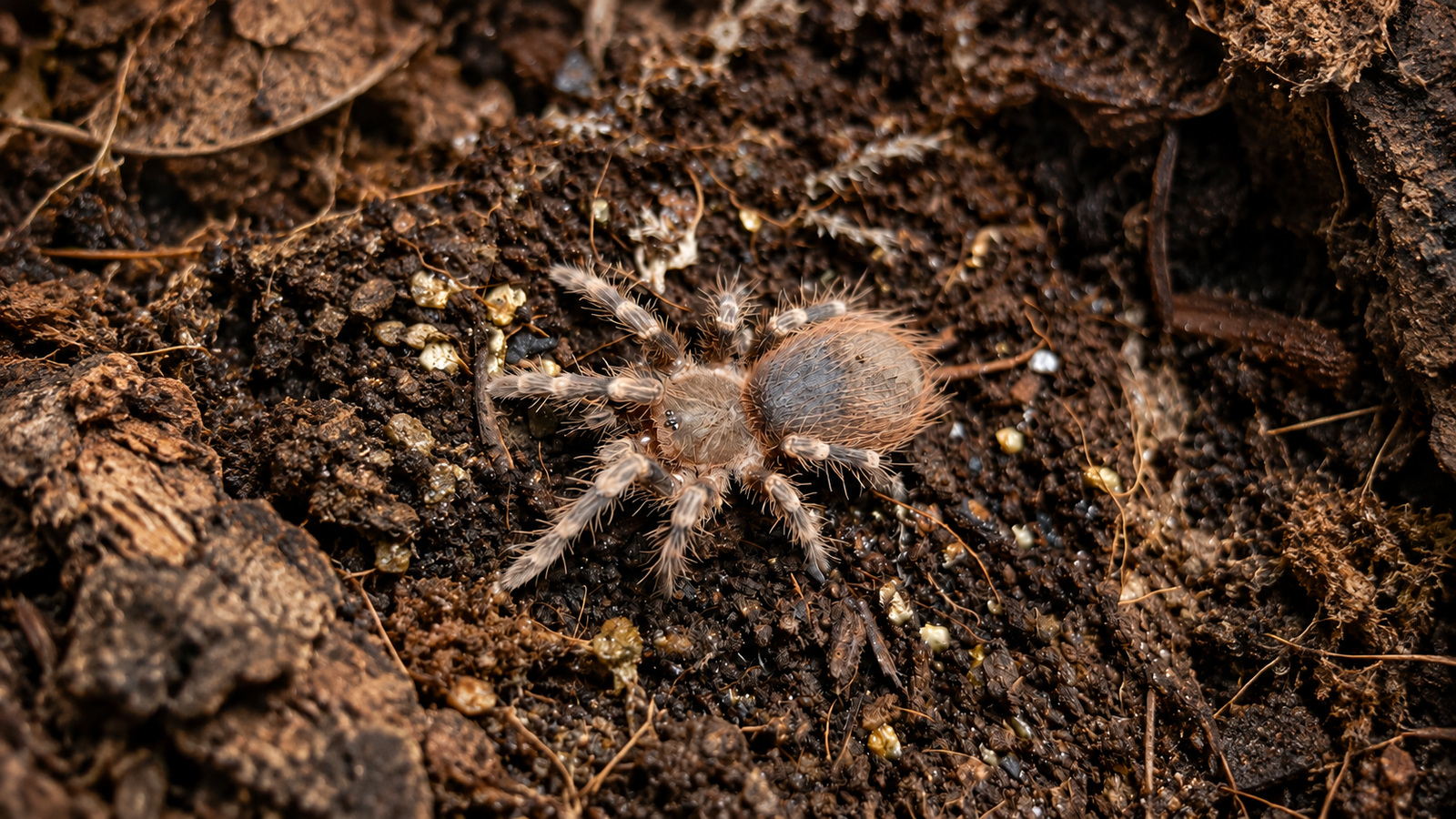
Life Stage Comparison

Mature Male
Spiderling

EXPLORE

Species
News
Community
Collections

LEARN

Beginner Guides
Care Guides
Species Database
FAQ

SHOP & VISIT

Shop
Live Invertebrates
Visit Our Store
About ArachNeeds
Contact Us
© ArachNeeds
Privacy Policy · Terms · Shipping & Returns