
ArachNeeds — Philippine Invertebrate Platform
← Back to Species Database

Asian Forest Scorpion

Heterometrus longimanus

A powerful black forest scorpion distinguished by elongated male pincers, secretive behavior, and a strong preference for humid, sheltered habitats.

LIFESTYLE: Terrestrial
DIFFICULTY: Intermediate
ADULT SIZE: 3.5–5.5 inches (9–14 cm) total length.
GROWTH RATE: Moderate
TEMPERATURE: 24–28°C (75–82°F)
HUMIDITY: 70–85% RH; moist substrate with good ventilation.

About This Species

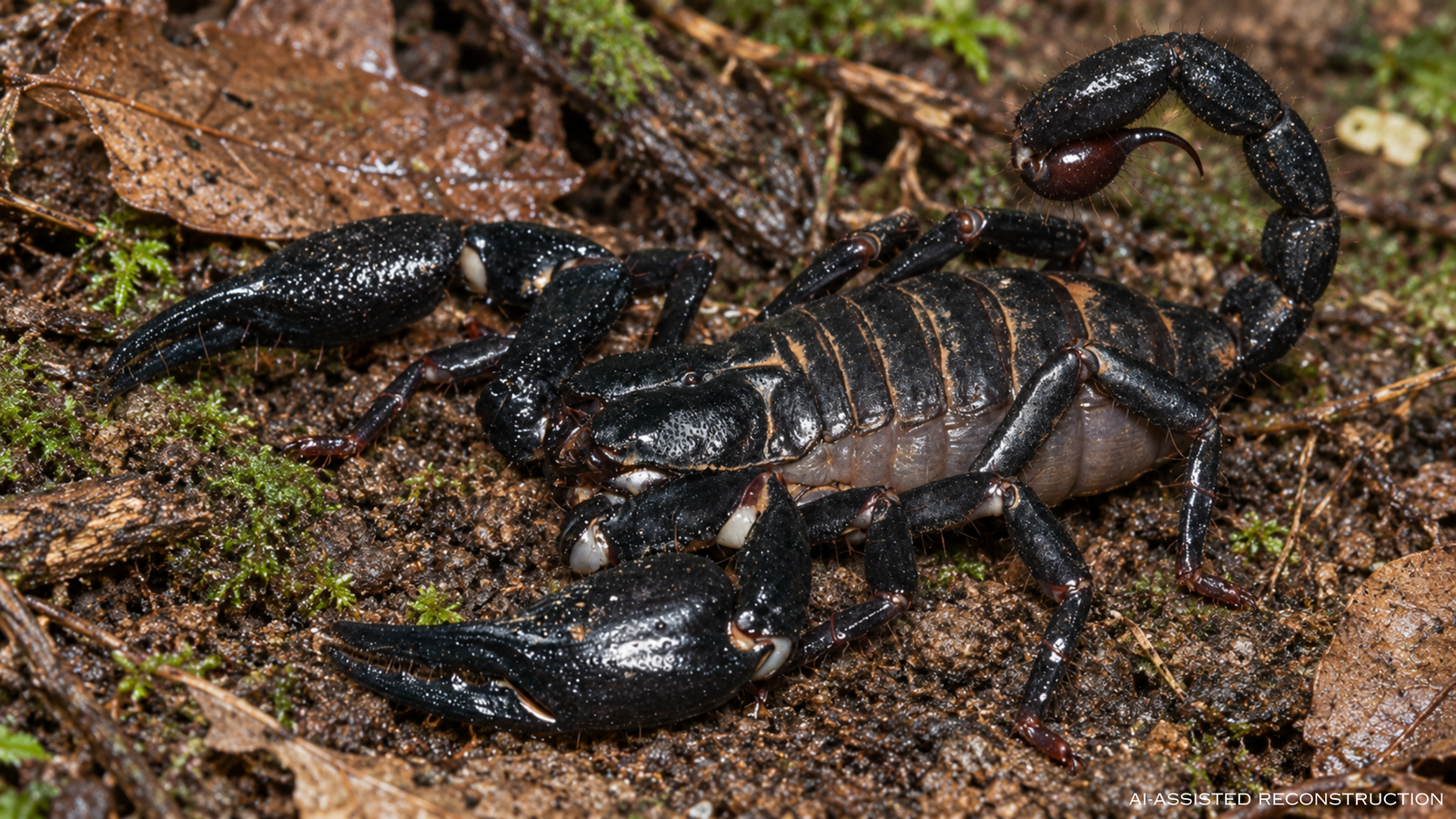
The Asian Forest Scorpion is a heavily built, dark-colored predator with powerful pincers and a glossy black body. Its appearance is imposing, but its natural behavior is largely shaped by a need for shelter.

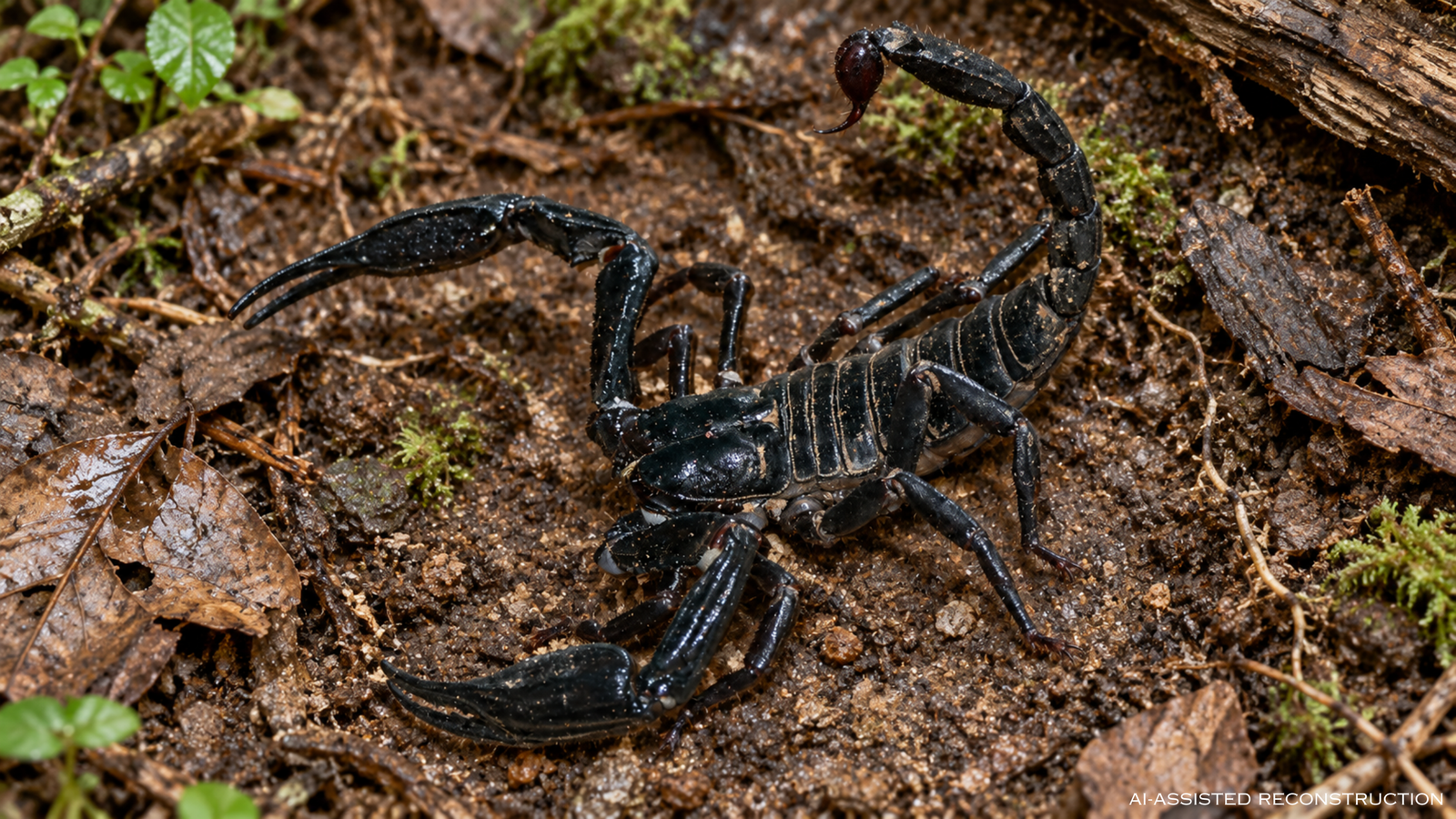
And there is an interesting difference between the sexes.

Mature males develop distinctly longer and narrower pincers, while females retain a broader, heavier appearance. Beneath the forest canopy, this scorpion relies on concealed retreats and emerges to hunt nearby invertebrates. Its combination of sexual dimorphism, defensive behavior, and adaptable shelter selection makes it a fascinating species to observe.
Natural History & Behavior

Distribution

Native to parts of Southeast Asia, including Malaysia, Singapore, Indonesia, and the Philippines, with records from India's Andaman Islands. Historical reports from Thailand and parts of mainland Indochina have been revised following taxonomic studies.

Habitat

Inhabits humid tropical forests, including areas with substantial leaf litter, fallen wood, and decaying vegetation. Individuals shelter beneath logs, inside rotten wood, under bark, and in protected spaces around tree bases. These locations provide stable moisture and protection from daytime exposure.

Defensive Behavior

Often retreats when disturbed but may raise its pincers, adopt a defensive posture, or pinch if approached closely. Its large pedipalps are effective defensive structures. Stinging is also possible, although its venom is generally considered less medically significant than that of dangerous buthid scorpions. Individual behavior varies, and direct handling is best avoided.

Webbing & Burrowing

In nature, it frequently uses existing shelters beneath wood, bark, and other forest debris. Some field observations also report individuals occupying underground retreats. In captivity, juveniles may excavate beneath suitable hides, while established adults often remain concealed throughout the day. Expect greater activity after dark. Although impressive when visible, this is not a consistently exposed display species.

Species Details

Temperament

Defensive

Lifespan

Captive estimates commonly suggest approximately 5–8 years, with females potentially outliving males. Reliable species-specific lifespan averages for each sex remain limited.

Taxonomy

Animalia > Arthropoda > Arachnida > Scorpiones > Scorpionidae > Heterometrinae > Heterometrus > Heterometrus longimanus

Husbandry

Enclosure

Begin with a small, secure enclosure that allows young scorpions to locate food and shelter easily. As juveniles grow, increase floor space and substrate depth. Adults benefit from a low terrestrial enclosure with approximately 12 inches of length, adequate ventilation, and several protected retreats. Provide sufficient substrate for digging beneath hides, but secure all heavy decorations against collapse. Individual housing is the safest general approach.

Substrate

A moisture-retaining mixture of organic soil, coco fiber, and leaf litter provides a suitable forest-floor environment. Use enough depth to support shelter construction, increasing toward approximately 4–6 inches for established adults where enclosure dimensions allow. Keep the lower substrate consistently moist without creating stagnant, waterlogged conditions. The upper surface can be slightly drier, giving the scorpion access to different moisture levels.

Feeding

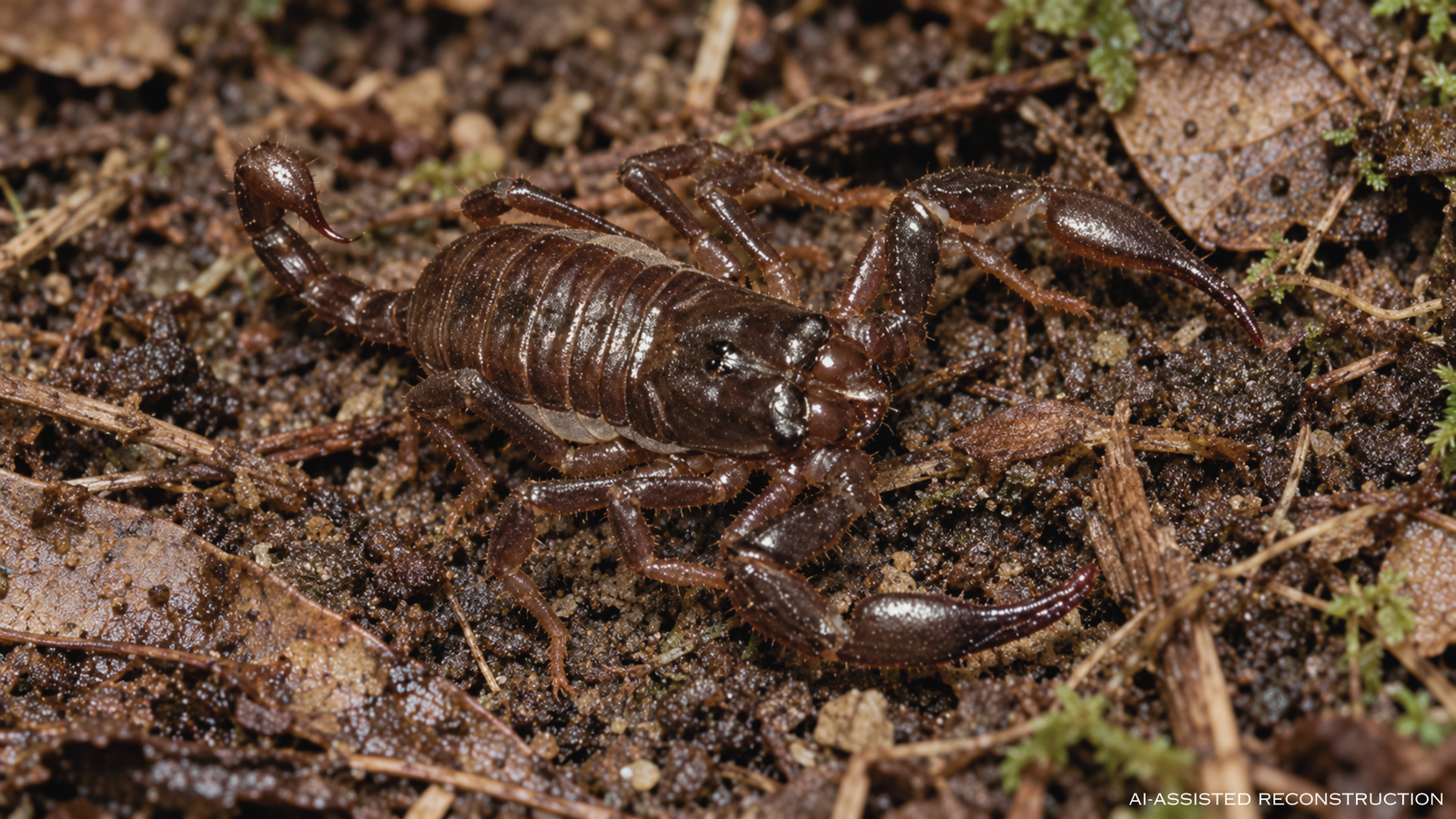
Once young scorpions have left their mother's back, offer suitably sized live prey such as small crickets or roach nymphs. Increase feeder size gradually as the scorpion develops. Juveniles may feed more frequently during active growth, while established adults generally need less frequent meals. Use appetite, body condition, and molting behavior to guide feeding. Remove uneaten insects, especially when the scorpion becomes inactive.

Water

Young scorpions benefit from accessible moisture in the substrate and tiny droplets placed along part of the enclosure wall. Avoid deep dishes for small scorplings. Introduce a shallow water dish as the animal grows. Established juveniles and adults should have reliable access to clean water. Maintain moisture within the lower substrate rather than depending entirely on misting. Good ventilation remains essential to prevent stagnant conditions.

Molting

Premolt may involve reduced activity, food refusal, and a noticeably swollen body. Remove uneaten prey and avoid disturbing the scorpion. Maintaining appropriate substrate moisture helps prevent unnecessary dehydration during recovery. Newborn scorplings remain on their mother's back during their earliest development. Once they become independent, they can be moved into individual enclosures. Allow freshly molted juveniles to harden before offering prey. Adults no longer molt.

Breeding & Reproduction

Breeding is achievable in captivity, but identifying compatible, correctly sexed adults is important. Mature males are recognizable by their elongated pincers, although other diagnostic characters may be needed to confirm the species. Courtship involves the male grasping the female's pedipalps and guiding her toward a suitable surface for spermatophore transfer. The real commitment comes afterward. A historical reproductive record, cited in a published 2009 study, reports 34 live young following approximately 12 months of gestation, with birth occurring in July. This is one documented account, not a species-wide average. Females carry newborn scorplings on their backs. Provide secure, undisturbed conditions until the young become independent.

Life Stage Comparison

Male
Scorpling

EXPLORE

Species
News
Community
Collections

LEARN

Beginner Guides
Care Guides
Species Database
FAQ

SHOP & VISIT

Shop
Live Invertebrates
Visit Our Store
About ArachNeeds
Contact Us
© ArachNeeds
Privacy Policy · Terms · Shipping & Returns