
ArachNeeds — Philippine Invertebrate Platform
← Back to Species Database

Yellow Fat-tailed Scorpion

Androctonus australis

A North African desert scorpion distinguished by its thick tail, nocturnal hunting behavior, and medically significant venom.

LIFESTYLE: Terrestrial
DIFFICULTY: Advanced
ADULT SIZE: 3–4 inches (7.5–10 cm)
GROWTH RATE: Moderate
TEMPERATURE: 24–29°C (75–84°F)
HUMIDITY: 30–40% RH as a guide; dry habitat with localized hydration.

About This Species

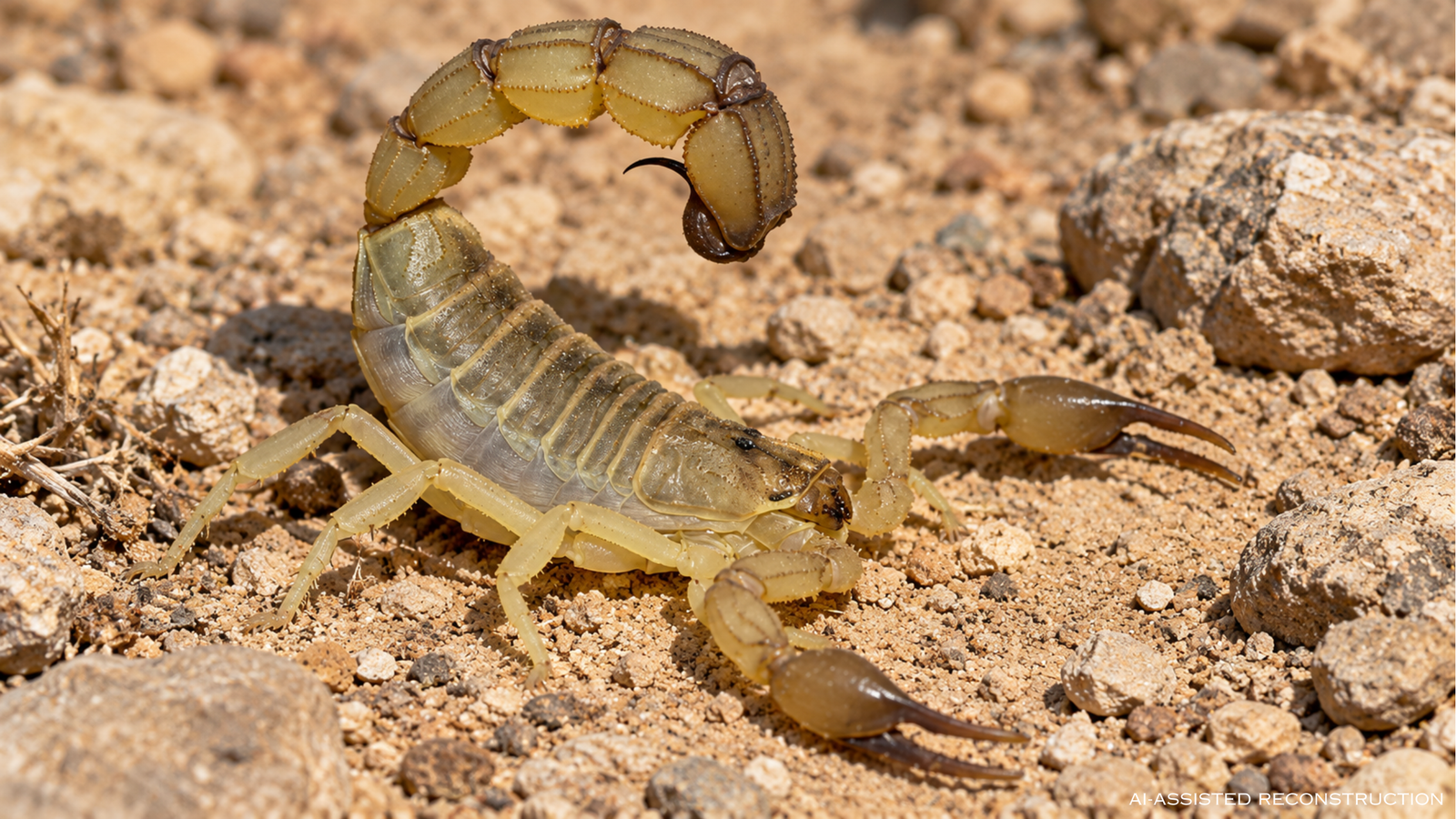
The Yellow Fat-tailed Scorpion is recognized by its robust tail, relatively slender pincers, and yellow to ochre coloration. Native to North African deserts, Androctonus australis is an effective nocturnal predator equipped with one of the most medically significant venoms among scorpions.

But its formidable reputation tells only part of the story. During daylight, it relies on sheltered retreats to escape extreme surface conditions. Activity increases when temperatures become favorable, revealing an animal closely adapted to the seasonal rhythms of arid environments. Its ecology and reproduction are as remarkable as its defensive capabilities.
Natural History & Behavior

Distribution

Primarily associated with the Sahara and surrounding arid regions of North Africa, including Algeria, Tunisia, Libya, Egypt, and Morocco. Historical records extend farther into Africa and Asia, although some require reassessment because of taxonomic changes and confusion with related species.

Habitat

Inhabits deserts, rocky plains, arid plateaus, and other dry environments where shelter is available beneath stones and within natural crevices. It generally avoids exposed daytime conditions, retreating into protected spaces that reduce heat and water loss. Individuals may also occupy cracks in stone walls and other structures near human settlements.

Defensive Behavior

Typically relies on retreat or a raised defensive posture when disturbed. If cornered, it can deliver rapid, repeated stings. Its venom can cause severe systemic effects involving the nervous, cardiovascular, and respiratory systems. Envenomation may be life-threatening, particularly for children and medically vulnerable individuals. Direct handling is unacceptable. A sting requires immediate emergency medical assessment.

Webbing & Burrowing

Scorpions do not construct silk retreats. Androctonus australis commonly shelters beneath stones and inside existing crevices rather than excavating elaborate burrow systems. Young individuals may establish shallow scrapes beneath cover, while adults often occupy stable retreats and emerge to hunt after dark. In captivity, established specimens may remain visible near their shelters, particularly during evening activity. They can make interesting display animals, but secure containment must always take priority.

Species Details

Temperament

Defensive

Lifespan

Females: approximately 5–7 years. Males: approximately 3–5 years. These are captive-keeping estimates; robust species-specific longevity studies remain limited.

Taxonomy

Animalia > Arthropoda > Arachnida > Scorpiones > Buthidae > Androctonus > Androctonus australis

Husbandry

Enclosure

Begin with a compact, escape-proof enclosure that allows a young scorpion to locate suitable prey and shelter. Increase floor space as it grows. An adult enclosure around 12 × 8 inches (30 × 20 cm) provides a practical starting point, with secure hiding places and a stable substrate. Use a mechanically secured lid, fine ventilation, and secondary containment within a locked area. Check every opening before maintenance. This medically significant species is unsuitable for inexperienced keepers or casual handling.

Substrate

Use a compactable mixture of sand and pesticide-free mineral soil to resemble the species' dry, firm natural environment. Provide enough depth for shallow excavations and secure shelter beneath stable stones or bark. Heavy decorations must be positioned so they cannot collapse if the substrate shifts. Maintain predominantly dry conditions while allowing a small, protected moisture refuge when needed, particularly for developing juveniles. Avoid constantly wet substrate and excessive misting.

Feeding

Young scorplings can begin feeding after separating from their mother and completing their initial molt. Offer appropriately sized small crickets, roach nymphs, or suitable prepared insect prey when accepted. Increase feeder size as the scorpion grows. Juveniles may feed more frequently, while adults generally require less frequent meals. Monitor body condition and appetite rather than following a rigid schedule. Remove uneaten prey, particularly when molting approaches.

Water

Although adapted to arid environments, this species still requires opportunities for hydration. Small juveniles can access tiny droplets or moisture within a limited section of their enclosure. Avoid large droplets, standing water, and direct spraying. Established juveniles and adults may be offered a stable, shallow water dish without increasing moisture throughout the entire enclosure. Maintain dry surroundings while ensuring that hydration remains accessible.

Molting

Juveniles may reduce feeding and remain concealed before molting. Avoid disturbing established retreats or leaving live prey inside during this vulnerable period. A slightly moister protected area can help prevent excessive drying without turning the entire enclosure humid. After molting, the new exoskeleton requires time to harden before normal feeding resumes. Unlike tarantulas that may continue molting as adults, scorpions stop molting after reaching maturity.

Breeding & Reproduction

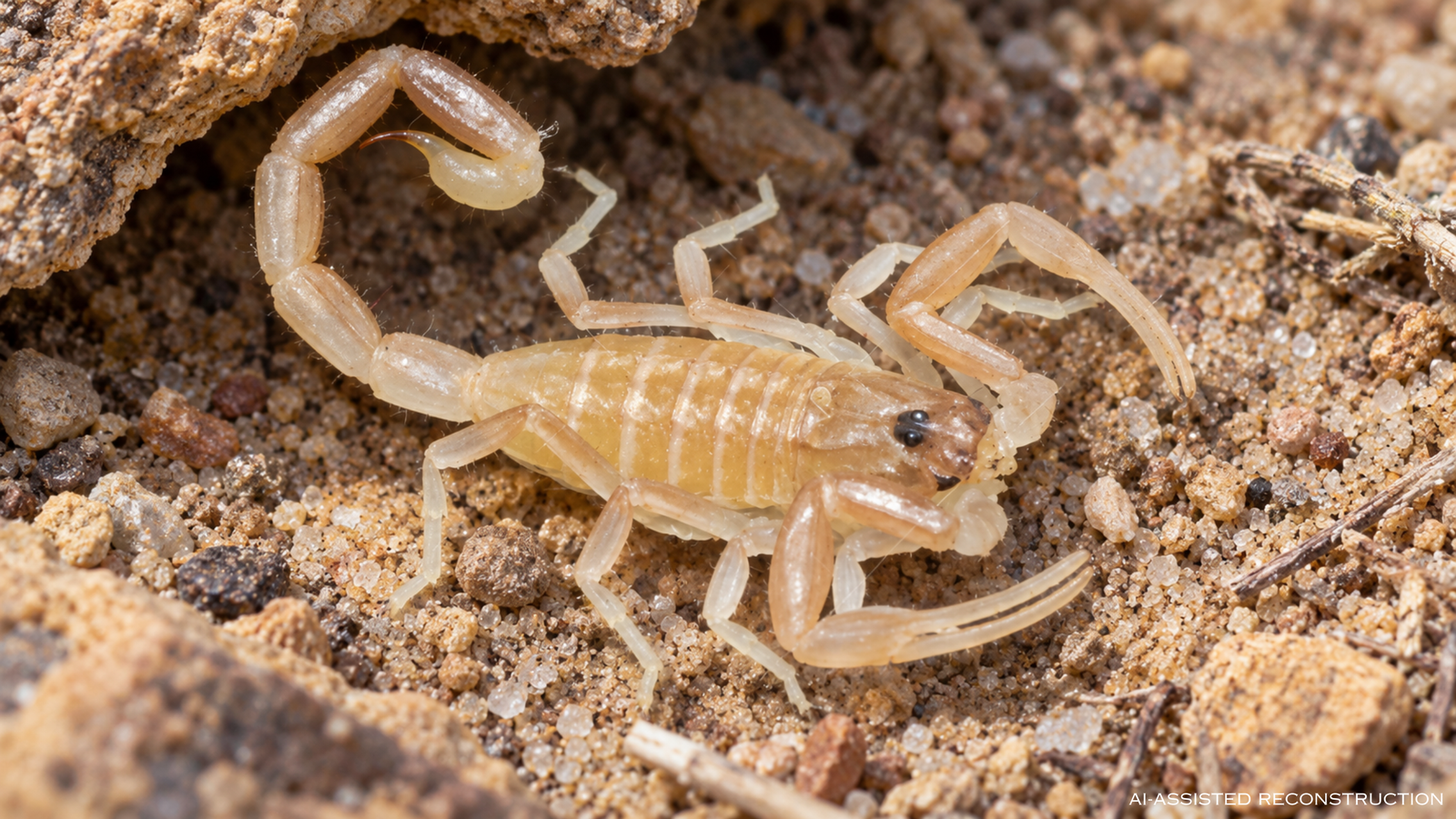
Reproduction is challenging primarily because of the serious risks involved in introducing and maintaining this medically significant species. Field research from Algeria documents seasonal breeding, with mating concentrated around late summer and autumn and births beginning in spring. Gestation in the studied population was estimated at approximately five to six months. But successful birth does not guarantee offspring survival. The Natural History Museum of Crete documented one female producing 46 live young, with fewer than 25 surviving beyond the first two days. This is a specific reproductive observation, not a typical brood size. Newborn scorplings remain on their mother's back until their first molt before becoming independent.

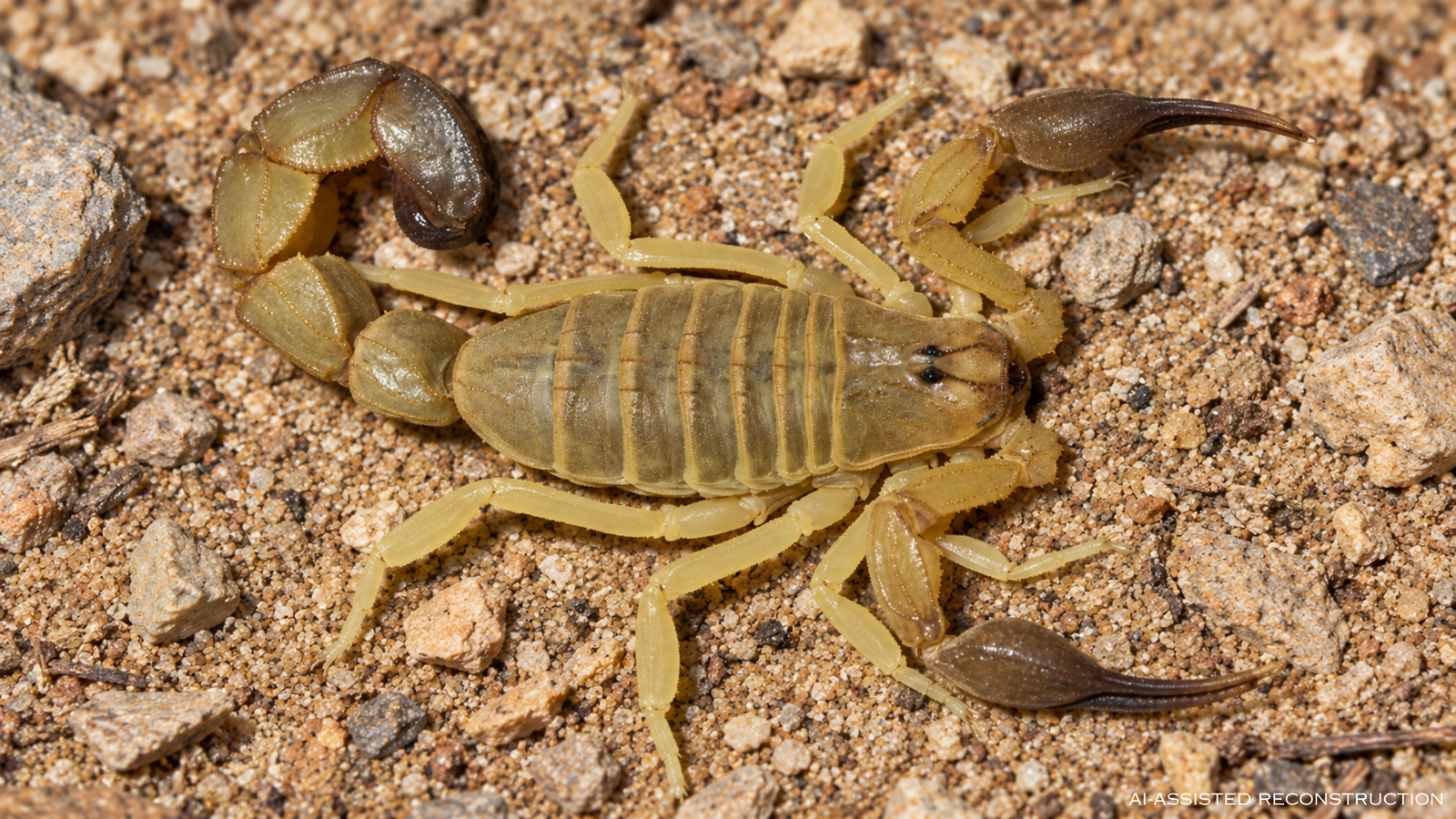
Life Stage Comparison

Male
Scorpling

EXPLORE

Species
News
Community
Collections

LEARN

Beginner Guides
Care Guides
Species Database
FAQ

SHOP & VISIT

Shop
Live Invertebrates
Visit Our Store
About ArachNeeds
Contact Us
© ArachNeeds
Privacy Policy · Terms · Shipping & Returns